
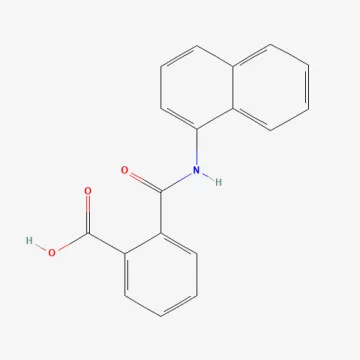
Naptalam
Description
Mode of action
Naptalam belongs to the chemical class of phthalic acid derivatives and functions as a selective herbicide with specific physiological effects.
The primary mechanism of action is the inhibition of auxin transport within the plant, which is essential for normal growth and development.
By interfering with the movement of these plant growth hormones, naptalam prevents meristematic cell division in target weed species.
The herbicide acts systemically, absorbed through the roots and emerging shoots, effectively halting the development of weeds at the seedling stage.
This disruption of metabolic pathways leads to the eventual necrosis and death of sensitive weed plants, providing residual control.
What it targets
Naptalam is primarily used to control a variety of broadleaf weeds that emerge from seeds in agricultural field settings.
It is particularly effective against species like pigweed and common ragweed, which are notorious for competing with crops.
The compound is widely valued for its selectivity in legume crops, where it provides protection without harming the primary crop.
By controlling competing vegetation early, it allows crops to optimize their nutrient and water uptake during critical development phases.
Integrated weed management programs often utilize naptalam to mitigate the emergence of early-season annual broadleaf weeds.
Rates and timing
Application rates for naptalam must be adjusted based on soil texture, as heavier soils may require higher doses for consistent efficacy.
The timing of application is typically pre-emergence or early post-emergence, targeting the most vulnerable stage of weed development.
Uniform distribution across the soil surface is essential for the product to create a protective barrier against emerging weed seeds.
Consulting specific product labels for regional guidelines is mandatory, as environmental conditions heavily influence the required dosage.
Proper calibration of spraying equipment ensures that the intended amount of active ingredient is applied per hectare.
Restrictions
Strict adherence to personal protective equipment (PPE) protocols is required for all personnel involved in handling or applying the chemical.
Care must be taken to prevent drift, which could lead to unintended damage to sensitive adjacent vegetation or non-target crops.
Environmental stewardship requires avoiding any runoff into water bodies to prevent contamination of aquatic ecosystems.
Storage must be conducted in cool, dry, and well-ventilated facilities to maintain product integrity and safety standards.
Any deviations from specified application windows or methods can result in reduced performance or potential crop injury.
Status in the European Union
Not approved in the EU
- CAS number
- 132-66-1
- Category (EU)
- HB - Herbicide
EU status is for reference only and does not replace national registration in your country.