
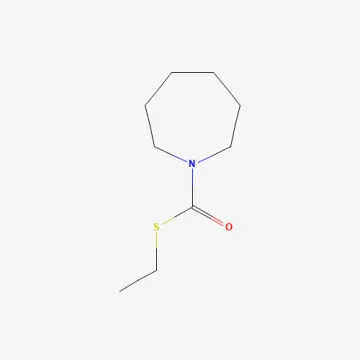
Molinate
Description
Mode of action
Molinate belongs to the thiocarbamate chemical class. It is a selective systemic herbicide primarily absorbed by the roots and shoots of germinating weed seeds.
The mode of action involves the inhibition of protein and lipid biosynthesis within the plant, specifically targeting the meristematic tissues to halt cellular division.
As a result, weed seedlings fail to develop further and die shortly after germination, often before emergence from the soil or water layer.
The efficacy of molinate is highly dependent on moisture conditions, which is why it is uniquely suited for application in flooded rice cultivation systems.
Rice crops possess a metabolic capability to neutralize the active ingredient, ensuring high selectivity and crop safety during the treatment process.
What it targets
The primary use of molinate is in commercial rice production to manage a specific range of annual grass weeds that thrive in aquatic environments.
The main target is Barnyard grass (Echinochloa crus-galli), which is considered one of the most competitive and yield-limiting weeds in rice farming worldwide.
It is also effective against various species of foxtail and other annual grasses that emerge during the early vegetative stages of the rice crop.
While its spectrum is relatively narrow, it serves as a critical component in herbicide programs, especially when targeting resistant grass populations.
- Barnyard grass (Echinochloa crus-galli)
- Yellow foxtail (Setaria pumila)
- Green foxtail (Setaria viridis)
Rates and timing
Typical application rates for molinate range from 3 to 6 liters per hectare, depending on the specific formulation and the density of the weed infestation.
Application is usually carried out via spraying onto the soil before flooding or directly into the irrigation water after the field has been flooded.
The timing is crucial; applications are most effective when directed at germinating weeds, specifically in the very early seedling emergence stage.
Maintaining proper water depth is essential for the success of the herbicide, as it allows the chemical to properly disperse and reach the target weed seeds.
Farmers are advised to monitor the crop stage closely and adhere to the pre-harvest interval to ensure no residue issues in the final rice grain product.
Restrictions
Molinate is classified as moderately toxic, and operators must wear appropriate personal protective equipment (PPE) during mixing and application to avoid skin and eye contact.
Environmental precautions are vital; water from treated fields should not be discharged into open water bodies due to its potential toxicity to aquatic life.
Application should be avoided during periods of high wind or extreme weather conditions to minimize the risk of off-target drift and ensure maximum efficacy.
Storage must be maintained in a secure, dry, and well-ventilated area, keeping the product away from food, feed, and water supplies.
Always review local regulations regarding the use of thiocarbamate herbicides, as restrictions may vary depending on the specific region and environmental laws.
Status in the European Union
Not approved in the EU
- CAS number
- 2212-67-1
- Category (EU)
- HB - Herbicide
- Approved from
- 01.08.2004
- Approval until
- 31.07.2014
- ADI
- 0.008 mg/kg bw/day
- ARfD
- 0.1 mg/kg bw
- AOEL
- 0.008 mg/kg bw/day
EU status is for reference only and does not replace national registration in your country.