
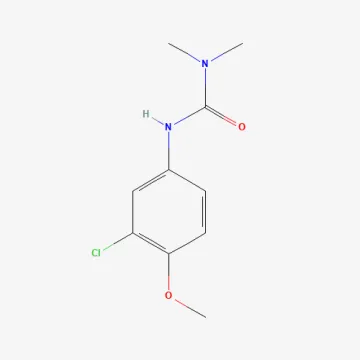
Metoxuron
Description
Mode of action
Metoxuron belongs to the chemical class of urea derivatives. It is a systemic herbicide absorbed primarily by the root system and partially through the leaf surface of weeds.
The mode of action is based on the inhibition of photosynthesis. Upon entering the plant tissues, the substance blocks electron transport in photosystem II, leading to the cessation of carbohydrate formation and weed death.
Due to its systemic properties, the substance can move through the plant's xylem, providing a long-lasting protection period and high efficacy against young seedlings.
The substance is characterized by moderate selectivity, which allows for its use on specific crops without the risk of phytotoxicity when dosages are strictly followed.
The maximum activity of the product is observed under conditions of sufficient soil moisture, as the primary uptake occurs through the roots.
What it targets
Metoxuron effectively suppresses a wide range of annual broad-leaved and some grass weeds. It is particularly effective against species resistant to other herbicide groups.
The main target objects include species of Chenopodium, Capsella, Polygonum, as well as certain species of Apera and other grass weeds in their early development stages.
The product is used primarily in winter wheat and carrot crops. In carrots, it is considered one of the key tools for controlling problematic weeds during the stage when the crop has at least two true leaves.
Efficacy against weeds strongly depends on their development stage: plants are most sensitive during germination and the cotyledon stage.
- Common lambsquarters
- Shepherd's purse
- Prostrate knotweed
- Loose silky-bent
- Common chickweed
Rates and timing
Metoxuron application rates vary depending on the soil type and the crop being cultivated. On light soils, minimum dosages are recommended to prevent potential leaching into the root zone.
In cereal crops, treatment is most often carried out during the tillering stage. For carrots, it is critical to wait until the crop has formed at least two to three true leaves to avoid plant stress.
The application of the product should be performed in calm weather at temperatures between +10 and +25 degrees Celsius to achieve optimal effect.
It is not recommended to perform treatments if the crop is under stress (drought, frost, damage by diseases or pests).
The volume of the working solution must be sufficient for uniform coverage of the soil or weed foliage, typically 200–300 liters per hectare.
Restrictions
Metoxuron should not be applied on soils with very low humus content or on highly sandy soils, as the risk of phytotoxicity to the crop increases significantly.
Overlapping during application must be avoided to prevent exceeding local rates, which can lead to suppression of the main crop.
When working with the product, it is necessary to use personal protective equipment for the skin, respiratory tract, and eyes, as the substance can cause irritation.
After using the herbicide in crop rotation, it is not recommended to sow crops sensitive to urea derivatives in the current season without deep tillage.
Store the product in a tightly closed original container in a cool, dry place, out of reach of children and animals, and away from food products.
Status in the European Union
Not approved in the EU
- CAS number
- 19937-59-8
- Category (EU)
- HB - Herbicide
EU status is for reference only and does not replace national registration in your country.