
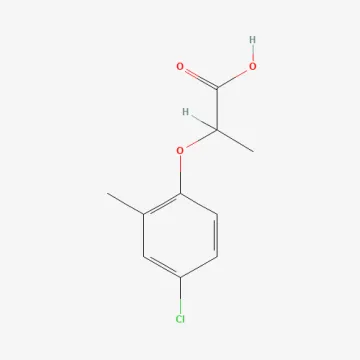
Mecoprop
Description
Mode of action
Mecoprop belongs to the phenoxy carboxylic acid chemical group. It acts as a systemic, selective herbicide that is primarily absorbed through the foliage and translocated within the weed.
The mode of action mimics the effect of natural plant hormones (auxins), causing uncontrolled and disorganized growth in sensitive broad-leaved weeds.
This disruption of metabolic processes leads to the twisting of stems, curling of leaves, and eventual necrosis, effectively inhibiting the growth of competing plants.
The R-isomer, known as mecoprop-P, is commonly used in modern agriculture because it provides superior herbicidal activity and allows for lower dosage rates compared to the racemic mixture.
It is frequently formulated in combinations with other herbicides like MCPA, dicamba, or fluroxypyr to broaden the spectrum of controlled species and manage herbicide resistance.
What it targets
Mecoprop is specifically used to target a wide variety of annual and perennial broad-leaved weeds in various agricultural settings.
It is highly effective against challenging weed species such as cleavers, chickweed, and various speedwell species that are often resistant to other hormonal herbicides.
The primary use of this herbicide is in cereal crops, including wheat, barley, and oats, as well as in professional lawn and turf management where grass safety is paramount.
Because grass crops are naturally tolerant to phenoxy acids, mecoprop provides a clean way to remove unwanted broad-leaved competitors without harming the crop.
- Galium aparine (Cleavers)
- Stellaria media (Chickweed)
- Veronica spp. (Speedwells)
- Capsella bursa-pastoris (Shepherd's purse)
- Ranunculus repens (Creeping buttercup)
Rates and timing
Application rates for mecoprop vary depending on the specific formulation, the weed growth stage, and the crop species being treated during the growing season.
It is most effective when applied during the period of active weed growth, typically when the weeds have reached the seedling to early rosette stage for optimal uptake.
Ideal conditions for application involve temperatures between 10 and 20 degrees Celsius, ensuring that the plant metabolism is active enough for the herbicide to translocate effectively.
When tank-mixing with other agrochemicals, users should verify compatibility and ensure that the mixture does not increase the risk of phytotoxicity to the target crop.
Producers must follow specific product labels for dosage, as excessive rates can sometimes lead to transient crop stress, especially under adverse weather conditions.
Restrictions
Mecoprop is classified as moderately toxic, necessitating the use of personal protective equipment (PPE) including gloves, eye protection, and suitable clothing during handling.
Extreme care must be taken to prevent drift, as nearby sensitive crops like sugar beets, sunflowers, and legumes can be severely damaged by even minute amounts of the product.
Avoid applying the herbicide near water sources to prevent contamination, as mecoprop can impact aquatic ecosystems if mismanaged or dumped.
Store the product in its original, sealed container in a cool, dry, and secure location away from the reach of children, pets, and unauthorized personnel.
Clean all spray equipment thoroughly after use to avoid cross-contamination when applying other products to non-tolerant crops in subsequent sessions.
Status in the European Union
Not approved in the EU
- CAS number
- 93-65-2
- Category (EU)
- HB - Herbicide
- Approved from
- 01.06.2004
- Approval until
- 31.01.2017
- ADI
- 0.01 mg/kg bw/day
- ARfD
- Not appl.
- AOEL
- 0.04 mg/kg bw/day
EU status is for reference only and does not replace national registration in your country.