
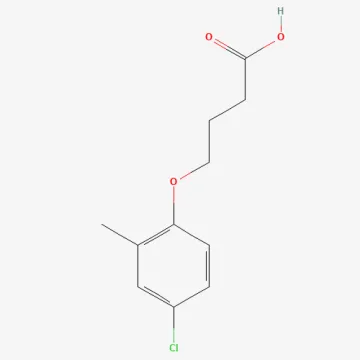
MCPB
Description
Mode of action
MCPB (4-(4-chloro-2-methylphenoxy)butanoic acid) belongs to the phenoxycarboxylic acid chemical class. It is a selective systemic herbicide that only exerts its biological activity after metabolic activation within sensitive plant tissues.
The mechanism of action relies on the beta-oxidation process. Inside susceptible weeds, the compound is converted into its more active form, MCPA, which functions as a synthetic auxin mimic.
This disruption of the hormonal balance causes abnormal cell growth, stem twisting, leaf curling, and the eventual death of the weed due to physiological exhaustion and tissue collapse.
The selectivity of MCPB is based on the fact that many crop species do not possess the metabolic pathways required to rapidly convert this substance into its active form, thus ensuring crop safety.
The substance is rapidly absorbed by leaves, making it effective even on weeds with waxy surfaces, provided there is adequate leaf area for chemical uptake.
What it targets
MCPB is effective against a wide range of broad-leaved weeds, specifically those highly susceptible to auxin-type herbicides during their early stages of growth.
The most vulnerable species include:
- common lambsquarters
- knotweed species
- shepherd's purse
- field pennycress
- field bindweed
The compound provides excellent results in suppressing weed competition in cereal crops, which are sensitive to more aggressive hormonal herbicides.
The economic value of this active ingredient lies in its role as a "soft" herbicide, ensuring protection for young cereal crops without causing phytotoxic damage.
It is important to note that against perennial weeds with deep-seated root systems, MCPB acts primarily as a growth regulator rather than a complete eradicant.
Rates and timing
The timing of MCPB application is critical: treatment should be carried out during the active growth phase of weeds when they are most vulnerable to systemic herbicides.
The optimal ambient temperature for application is between +12 and +22 degrees Celsius, as extreme temperatures significantly slow down the plant's metabolic activity.
The dosage of the active ingredient is adjusted based on weed species composition and the growth stage of the cereal crop, typically applied during the tillering phase.
The application requires a sufficient volume of spray solution to ensure uniform coverage of the leaf surface across all target weed populations.
Application during high winds or periods of rainfall risk should be avoided to prevent chemical drift and ensure maximum efficacy of the herbicide treatment.
Restrictions
A major limitation of MCPB is the high sensitivity of many broad-leaved crops, such as legumes, sugar beets, sunflowers, and most vegetable varieties.
The use of this product near sensitive crop fields must be strictly avoided, as even minor spray drift can lead to severe crop damage or total yield loss.
Proper personal protective equipment for skin and respiratory protection is required during handling, as the substance is classified as moderately hazardous to humans.
Storage must be in original containers within a cool, dry, and secure facility to prevent unauthorized access by people or animals.
Thorough cleaning of spray equipment is necessary after usage to prevent cross-contamination, which could negatively impact sensitive crops in subsequent applications.
Status in the European Union
Approved in the EU
- CAS number
- 94-81-5
- Category (EU)
- HB - Herbicide
- Approved from
- 01.05.2006
- Approval until
- 15.08.2026
- ADI
- 0.01 mg/kg bw/day
- ARfD
- 0.05 mg/kg bw
- AOEL
- 0.06 mg/kg bw/day
EU status is for reference only and does not replace national registration in your country.