

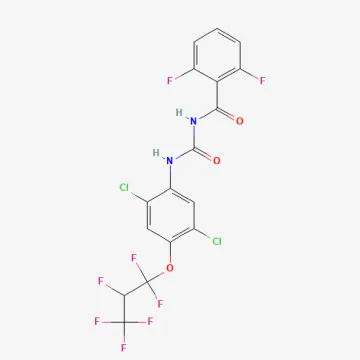
Description
Mode of action
Lufenuron belongs to the benzoylurea chemical class and acts as a potent insect growth regulator (IGR). It is classified specifically as a chitin synthesis inhibitor in pest larvae.
Unlike neurotoxic insecticides, lufenuron does not cause immediate mortality in insects. Its mode of action targets the developmental processes, specifically molting and cuticle formation.
Once ingested by the pest, the active ingredient interferes with the metabolism of chitin. As a result, the larva becomes unable to develop properly and dies during its subsequent molting attempt.
A key characteristic of this compound is its strong ovicidal effect. Insect eggs treated with lufenuron either fail to hatch or the larvae die immediately upon emergence from the eggshell.
The substance exhibits high lipophilicity, which allows it to penetrate the waxy leaf surfaces effectively and provides resistance against rain wash-off, ensuring prolonged residual protection.
What it targets
Lufenuron is primarily used against a wide range of Lepidoptera species, as well as certain types of Coleoptera and thrips in various crops.
The main targets of application are early-instar larvae, as they are most active in feeding and thus consume the highest quantity of the active ingredient from treated foliage.
The compound is highly effective against various species of cutworms, leafrollers, codling moths, and other moth species that damage fruit and vegetable crops.
It also demonstrates high efficacy in controlling the Colorado potato beetle and specific species of plant-feeding mites when integrated into a comprehensive pest management program.
In veterinary medicine and animal health, lufenuron-based compounds are widely utilized to manage flea populations by interrupting their life cycle in domestic animal environments.
Rates and timing
Application rates depend on the specific crop, pest pressure, and the developmental stage of the plants. Typical rates range from 0.2 to 0.5 liters of product per hectare.
It is recommended to apply the product during the peak egg-laying period or at the first larval emergence to minimize crop damage and ensure maximum efficacy.
The frequency of application per season is strictly regulated, typically limited to two or three treatments to prevent the development of resistance in pest populations.
Treatment intervals are usually between 10 and 14 days, reflecting the long-lasting protective window provided by lufenuron molecules on plant tissues.
Achieving a thorough and uniform spray coverage of the foliage is critical to ensure that the pest encounters the active ingredient during feeding.
Restrictions
Lufenuron is generally considered low in toxicity to bees and beneficial predatory insects when applied according to the label, though usage during peak flowering should be avoided.
Strict adherence to pre-harvest intervals is required, which may range from 14 to 30 days depending on the specific crop type being protected.
Operators must wear appropriate personal protective equipment to prevent inhalation, skin contact, or eye irritation during handling and application.
Disposal of product residues and equipment wash-water must be handled carefully to avoid contamination of water bodies, as the compound has moderate toxicity to aquatic life.
Storage must be in the original container in a cool, dry, and well-ventilated area, shielded from direct sunlight and kept away from unauthorized personnel, children, and pets.
Regulatory
Status in the European Union
Not approved in the EU
- CAS number
- 103055-07-8
- Category (EU)
- IN - Insecticide
- Approved from
- 01.01.2010
- Approval until
- 31.12.2019
- ADI
- 0.015 mg/kg bw/day
- ARfD
- Not appl.
- AOEL
- 0.01 mg/kg bw/day
Hazard classification (CLP)
Aquatic Acute 1 - H400Aquatic Chronic 1 - H410Skin Sens. 1 - H317
EU legislation
EU status is for reference only and does not replace national registration in your country.
Content graph
Connections · Lufenuron
Most often together:
Marketplace
Products · 2
