
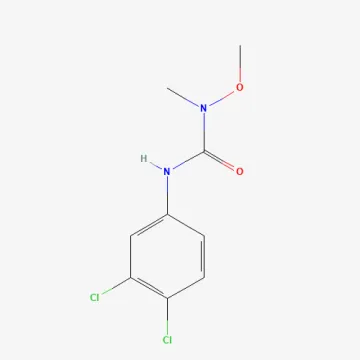
Linuron
Description
Mode of action
Linuron belongs to the urea derivative chemical class and is a highly effective selective herbicide with systemic and contact action properties.
The primary mechanism of influence on weed plants is the inhibition of photosynthesis, specifically by blocking electron transport in photosystem II.
Upon absorption by the plant through roots or leaves, the active ingredient translocates through the xylem, resulting in chlorosis and subsequent weed death.
The product exhibits significant soil activity by creating a protective barrier that prevents the germination of weed seeds for several weeks.
Selectivity of linuron is based on the crop's ability to metabolize the substance into non-toxic compounds, allowing for safe application during the growing season.
What it targets
This substance effectively suppresses a wide spectrum of annual broad-leaved weeds and some grass species during their early development stages.
Among the most sensitive species are common lambsquarters, pigweed, shepherd's purse, knotweed, hemp-nettle, common chickweed, and henbit.
Linuron demonstrates moderate efficacy against certain annual grass species if they are in the seedling or spike stage.
Maximum efficacy is achieved when using the product against weeds at the germination stage, making timely application of critical importance.
It is important to note that perennial weeds with established root systems are resistant to linuron, necessitating supplementary agrotechnical control methods.
Rates and timing
Application rates for linuron depend on soil type, humus content, and the weed spectrum present in the field, varying within a broad range.
On light soils with low organic matter content, minimum dosages are applied to avoid potential phytotoxicity to the crop.
On heavy, clay, or high-humus soils, application rates are increased to ensure the necessary concentration within the soil solution.
Treatments are typically performed before crop emergence or during early growth stages, strictly adhering to the regulations set for specific hybrids and varieties.
Prior to application, the sprayer must be calibrated to ensure uniform distribution of the working solution across the field surface.
Restrictions
It is not recommended to perform treatments when air temperatures exceed 25 degrees Celsius, as this can increase crop stress.
When handling the herbicide, appropriate personal protective equipment for the respiratory tract, skin, and eyes must be used according to safety instructions.
Spray drift onto neighboring crops must be avoided, as sensitive plants may suffer significant damage from exposure.
The impact of precipitation and irrigation must be considered: excessive moisture after application may lead to the herbicide leaching into the crop root zone.
When planning crop rotation, the possibility of residual soil effects should be considered, especially after using maximum application rates on low-microbial activity soils.
Status in the European Union
Not approved in the EU
- CAS number
- 330-55-2
- Category (EU)
- HB - Herbicide
- Approved from
- 01.01.2004
- Approval until
- 03.03.2017
- ADI
- 0.003 mg/kg bw/day
- AOEL
- 0.0063 mg/kg bw/day
EU status is for reference only and does not replace national registration in your country.