
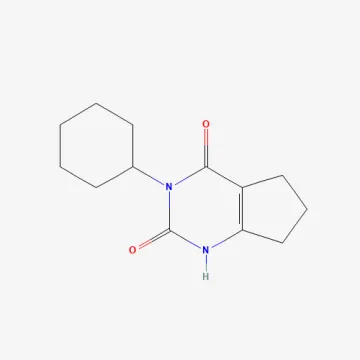
Lenacil
Description
Mode of action
Lenacil belongs to the uracil chemical class. It is a systemic herbicide that is primarily absorbed by the root system of weeds as they germinate from seeds.
The active ingredient enters weed cells and blocks the photosynthesis process by inhibiting the Hill reaction. This leads to the cessation of growth in sensitive species and their subsequent death.
The compound exhibits strong soil activity, which allows for the creation of a protective barrier in the upper soil layer, preventing new flushes of weed emergence.
The efficacy of Lenacil is directly dependent on soil moisture. Sufficient moisture is required to activate the molecules of the active substance, as absorption occurs via the soil solution.
Due to its high selectivity, Lenacil does not inhibit crop plants when used according to regulations, as it is rapidly metabolized and neutralized within the crop tissues.
What it targets
Lenacil is designed to control a broad spectrum of annual broad-leaved weeds. It demonstrates high biological efficacy against species that are difficult to manage with other agents.
- Common lambsquarters (Chenopodium album)
- Redroot pigweed (Amaranthus retroflexus)
- Black bindweed (Fallopia convolvulus)
- Common chickweed (Stellaria media)
- Purple dead-nettle (Lamium purpureum)
The herbicide is most effective against weeds at the seedling stage. If plants have already reached the rosette phase, the treatment efficacy is significantly reduced.
It is frequently used in integrated weed management programs for sugar and fodder beets, where suppressing weed competition at early vegetative stages is critical.
Lenacil has virtually no effect on grass weeds; therefore, it is typically used in tank mixtures with graminicides.
Rates and timing
Application rates for Lenacil depend on soil type, humus content, and the weed species present. Minimal doses are used on light soils, whereas maximum doses are reserved for heavy or high-humus soils.
Usually, the product is applied in split doses or as part of tank mixtures during the pre-emergence period or at early crop growth stages (cotyledon to the first true leaf pair).
When used as part of comprehensive programs, the dosage of the active ingredient can be reduced to minimize the pesticide load per hectare.
Ensuring uniform coverage of the soil with the spray solution is essential. The optimal volume of the spray solution is 200–300 liters per hectare to ensure high-quality surface wetting.
Application timing is strictly tied to the weed phenological stage. The "white thread" stage is considered optimal, as weed sensitivity is at its peak.
Restrictions
The main limitation relates to the sensitivity of following crops in the rotation. High application rates may cause residual effects on cereal or brassica crops.
It is not recommended to conduct treatments under extreme air temperatures, as this reduces the metabolic activity of the crop and increases the risk of phytotoxicity.
Proper personal protective equipment must be used when handling Lenacil. The product may cause irritation to the skin and mucous membranes.
Spraying is prohibited during windy weather to avoid drift onto neighboring fields of sensitive crops, such as rapeseed or sunflowers.
Storage of the product must be in its original packaging in a cool, dry place, preventing unauthorized access and moisture contact.
Status in the European Union
Approved in the EU
- CAS number
- 2164-08-1
- Category (EU)
- HB - Herbicide
- Approved from
- 01.07.2025
- Approval until
- 30.06.2040
- ADI
- 0.12 mg/kg bw/day
- ARfD
- Not appl.
- AOEL
- 0.12 mg/kg bw/day
EU status is for reference only and does not replace national registration in your country.