

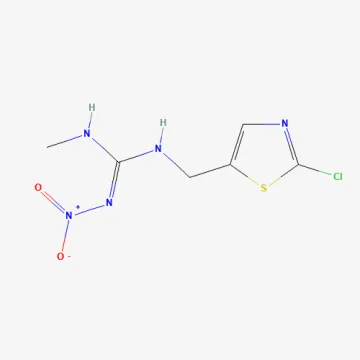
Description
Mode of action
Clothianidin belongs to the neonicotinoid chemical class and is a highly effective systemic insecticide. The substance has the ability to rapidly penetrate plant tissues and distribute acropetally, providing protection to new growth.
The mode of action involves blocking nicotinic acetylcholine receptors in the insect's nervous system. This causes persistent nerve impulses that lead to paralysis and the subsequent death of the pests.
Due to its high systemic properties, the active ingredient is effective against pests that live both openly and in hidden habitats. It is absorbed by roots or stems and translocated through the plant's sap, protecting it from within.
Products based on clothianidin have a long period of protective activity, which reduces the number of applications required throughout the growing season.
The substance demonstrates high resistance to wash-off by precipitation, which is critical for seed treatment and soil application during the early vegetative stage.
What it targets
Clothianidin is used to control a wide range of pests from the orders Coleoptera, Lepidoptera, and Hemiptera. It is extremely effective against various species of aphids, thrips, and leafhoppers.
The product shows excellent results in controlling soil-borne pests such as wireworms, false wireworms, and larvae of scarab beetles that damage the root system.
The active ingredient suppresses the development of cereal beetles, weevils, and the Colorado potato beetle at various stages of insect development.
The efficacy of the product extends to pests resistant to organophosphate and pyrethroid compounds, making it a crucial tool for anti-resistance strategies.
The insecticide is widely used on cereals, corn, sunflower, oilseed rape, potatoes, sugar beets, and many vegetable crops.
Rates and timing
Application rates vary depending on the method: seed treatment, soil incorporation, or foliar spraying on growing plants. For seed treatments, the rate depends on the crop and the target pest.
When spraying, it is important to evenly cover the leaf surface with the working solution to ensure optimal uptake of the active ingredient by the plant.
Pre-harvest intervals are strictly regulated and depend on the specific crop, typically ranging from 20 to 45 days after the final application.
Maximum efficacy is achieved by following optimal temperature conditions (usually between +12 and +25 degrees Celsius) and avoiding strong winds during application.
Treatments during the peak flowering period of entomophilous crops are not recommended to prevent harm to pollinators.
Restrictions
Clothianidin is highly toxic to bees, and therefore, spraying is strictly prohibited during the active flight period of honeybees.
Boundary protection zones for apiaries must be strictly observed to prevent spray drift onto flowering plants.
Personal protective equipment for the respiratory tract, skin, and eyes is mandatory when handling the substance, as it poses a moderate risk to humans.
The product must not enter water bodies, as it is hazardous to aquatic organisms and can accumulate in bottom sediments.
Adhering to application regulations helps minimize environmental risks and prevents the development of pest resistance in the long term.
Content graph
Connections · Clothianidin
Most often together:
Marketplace
Products · 72


