
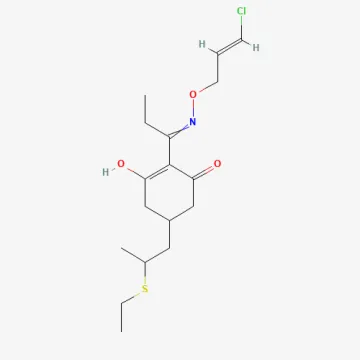
Clethodim
Description
Mode of action
Clethodim is a systemic, post-emergence herbicide belonging to the chemical class of cyclohexanediones, which acts specifically on grass species.
The herbicide works by inhibiting the enzyme acetyl-CoA carboxylase (ACCase), which is responsible for fatty acid synthesis in plant cells.
Once applied to the foliage, clethodim is rapidly absorbed and translocated via the phloem to the meristematic tissues (growing points) of the weed.
Inhibition of ACCase stops the production of phospholipids, leading to the collapse of cell membranes and the eventual death of the plant tissue.
Visual symptoms, such as yellowing and necrosis of the center leaves, generally appear within 7 to 14 days following application, leading to complete weed control.
What it targets
Clethodim is exclusively used for the management of grass weeds and does not have any herbicidal activity against broadleaf plants.
The herbicide is effective against a broad range of annual grass weeds, including wild oats, barnyardgrass, and foxtail species.
It also provides control over difficult-to-manage perennial grasses, such as quackgrass and johnsongrass, by damaging their underground rhizome systems.
The selectivity of this substance makes it a preferred choice for use in broadleaf crops like soybeans, sugar beets, canola, and sunflower.
It is commonly integrated into weed management programs where grasses pose a significant threat to crop yield due to competition for nutrients and sunlight.
Rates and timing
Application rates for clethodim depend on the growth stage of the target grasses and the density of the infestation present in the field.
Optimal results are achieved when weeds are actively growing, ideally at the 2 to 4-leaf stage for annual grasses to ensure effective uptake.
The addition of crop oil concentrates or surfactant additives is crucial for improving the penetration of the herbicide through the weed's leaf cuticle.
Application should occur within a temperature range of 10 to 25 degrees Celsius, avoiding periods of environmental stress like drought or extreme cold.
Standard practice involves using ground spraying equipment with a sufficient water volume to ensure uniform distribution across the entire canopy of the weeds.
Restrictions
Clethodim has no residual soil activity, meaning it will not provide control for subsequent flushes of weeds emerging after the application.
Users should avoid tank-mixing clethodim with certain broadleaf herbicides, as antagonistic interactions can reduce its efficacy against grass targets.
Rainfall occurring shortly after application, typically within 2 hours, may significantly reduce the effectiveness of the treatment by washing off the active ingredient.
Personnel handling the chemical must strictly follow safety protocols, including the use of protective clothing, gloves, and eye protection to prevent exposure.
Storage of the product should be in a cool, well-ventilated area, away from food, feed, or water sources to prevent accidental contamination.