
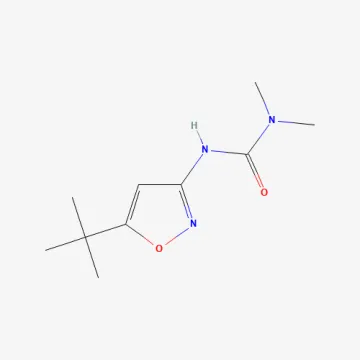
Isouron
Description
Mode of action
Isouron belongs to the urea derivative chemical class (phenylureas). It is a highly effective herbicide that enters weed plants primarily through the root system.
Its mechanism of action is based on inhibiting the photosynthesis process. The active substance blocks electron transport in photosystem II, leading to the cessation of energy production in weed cells.
Once inside the plant, isouron is translocated via the xylem (acropetally) to the growing points, causing leaf chlorosis and the subsequent death of the organism.
The substance is characterized by significant soil activity, which allows it to suppress the emergence of new weed sprouts for an extended period.
Isouron possesses a systemic effect, which makes it effective in destroying even deep-rooted perennial weed species.
What it targets
This compound is used to control a wide range of annual and perennial broadleaf weeds and some grassy weeds.
The primary objectives for using the product include woody and shrub vegetation, as well as stubborn herbaceous weeds.
Isouron is frequently utilized on non-agricultural lands to ensure complete control over unwanted vegetation.
The product effectively inhibits the growth of species such as mugwort, thistles, and various shrubs found along roadsides and industrial sites.
In field conditions, its use requires caution due to its high activity, thus it is rarely applied on sensitive cultivated plants.
Rates and timing
The application rates of isouron are determined by the degree of weed infestation and the specific species present at the site.
The application is typically performed during the period of active weed growth to ensure maximum absorption of the active substance.
Dosage must be strictly calibrated, as high concentrations of the substance can lead to long-term persistence of the herbicide in the soil.
Optimal application timing falls in the spring or early summer period when there is sufficient soil moisture to transport the herbicide to the roots.
When working, one should consider soil type: on light soils, the application rate may be reduced, while on heavy or humus-rich soils, an increase in dosage is required.
Restrictions
A major limitation is related to the high persistence of the substance in the soil, which makes planting crops immediately after herbicide application impossible.
It is necessary to prevent the product from entering water bodies, as isouron is toxic to aquatic flora and fauna.
When using the chemical, personal safety measures must be followed: use protective equipment for skin, respiratory organs, and eyes.
Applying the product in windy weather is strictly prohibited to prevent spray drift onto adjacent agricultural areas.
After using equipment to apply isouron, it must be thoroughly cleaned with special solutions to prevent damage to crops during subsequent spraying operations.
Status in the European Union
Not approved in the EU
- CAS number
- 55861-78-4
- Category (EU)
- HB - Herbicide
EU status is for reference only and does not replace national registration in your country.