
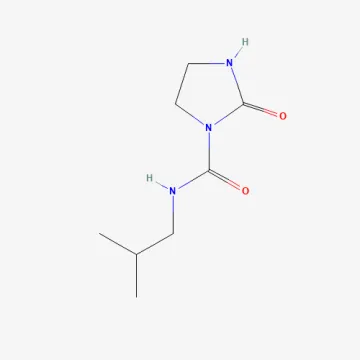
Isocarbamid
Description
Mode of action
Isocarbamide belongs to the chemical class of urea derivatives. It is a systemic active ingredient that penetrates the plant primarily through the root system from the soil solution.
Following absorption, the substance moves through the xylem to the above-ground organs of the plant, where it blocks photosynthesis by interfering with the Hill reaction. This leads to the cessation of carbohydrate formation necessary for weed growth.
Growth inhibition of weeds is observed shortly after germination, as the active substance is actively absorbed by seedlings and suppresses their development at early stages.
Preparations based on isocarbamide exhibit pronounced soil activity, allowing them to create a protective barrier in the topsoil that prevents the emergence of new weed flushes.
Unlike contact herbicides, the effectiveness of isocarbamide is highly dependent on soil moisture, which is required for the dissolution and absorption of molecules by weed roots.
What it targets
This group of substances is used for controlling a wide range of annual broadleaf and some grass weeds.
Isocarbamide is most effective against such troublesome weeds as common lambsquarters, smartweeds, pigweed, shepherd's purse, and hemp-nettle.
It is mainly used in sugar beet and fodder root crops, where it is crucial to ensure field cleanliness during early growth stages.
The substance shows high selectivity, without inhibiting the development of crops when application regulations are followed.
- Chenopodium album
- Amaranthus retroflexus
- Polygonum convolvulus
- Capsella bursa-pastoris
Rates and timing
Application rates depend on the soil texture: heavier clay soils with high humus content require maximum dosages.
The preparations are usually applied before crop emergence (pre-emergence) or post-emergence in early weed development phases.
When used in tank mixtures with other herbicides, the isocarbamide rate may be adjusted to broaden the spectrum of action.
Precise application timing is determined by the weed development phase, which should not exceed the two-true-leaf stage.
A crucial condition is thorough soil preparation — the soil must be fine-crumbled and sufficiently moist for the product to function properly.
Restrictions
It is not recommended to use isocarbamide on sandy soils with low humus content due to the risk of phytotoxicity to crops.
If heavy rainfall occurs immediately after application, leaching of the product into the root zone is possible, which may cause temporary crop suppression.
Drift of the working solution onto neighboring crops must be avoided, as sensitive plants may react sharply to the herbicide.
Working solutions must be prepared in strict accordance with the instructions; using hard water may reduce the active ingredient's effectiveness.
Personal protective equipment for skin and respiratory protection is mandatory when handling the product, as well as adherence to safety zones around water bodies.
Status in the European Union
Not approved in the EU
- CAS number
- 30979-48-7
- Category (EU)
- HB - Herbicide
EU status is for reference only and does not replace national registration in your country.