

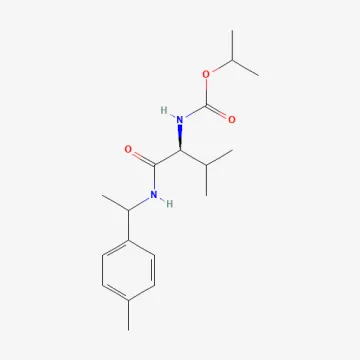
Description
Mode of action
Iprovalicarb belongs to the amino acid amide class of fungicides. It is a systemic fungicide that exhibits both protective and curative properties against a wide range of pathogens.
The mechanism of action involves the inhibition of phospholipid and fatty acid biosynthesis in fungal cells. This process effectively suppresses mycelial growth and spore production of the target pathogens.
The substance quickly penetrates plant tissues, ensuring long-lasting protection of vegetative parts. Due to its systemic activity, it can translocate through the plant xylem, protecting untreated areas as well.
Iprovalicarb prevents pathogen zoospores from penetrating the leaf epidermis, making it an essential tool for preventive spraying during periods of high infection risk.
A key feature of Iprovalicarb is its ability to maintain high efficacy even under adverse weather conditions, which is crucial for maintaining a stable infection control in various agroecosystems.
What it targets
The primary use of Iprovalicarb is to combat fungal diseases caused by Oomycetes. It shows high biological activity against late blight in potatoes and tomatoes.
The substance effectively suppresses downy mildew (peronospora) on vegetable crops, including onions, cucumbers, and other members of the Cucurbitaceae and Solanaceae families.
Iprovalicarb is frequently used in tank mixtures for the integrated control of pathogens, preventing the development of resistance in disease agents due to its specific mode of action.
Applying this product significantly reduces damage to fruits and leaves, which directly impacts the quality of the harvest during long-term storage and enhances the visual appearance of the produce.
Furthermore, Iprovalicarb helps protect young shoots during early developmental stages, which is critical for obtaining high-quality yields in intensive farming systems.
Rates and timing
Application rates for Iprovalicarb depend on the crop type, disease pressure, and the specific formulation used, typically ranging from 0.6 to 1.0 liters per hectare.
The timing of applications is determined by phytosanitary monitoring. Preventive spraying starts before the first symptoms appear or when weather conditions favor pathogen development.
The interval between applications in a typical protection program is 7 to 14 days. Ensuring uniform coverage of the leaf surface with the spray solution is essential for maximum biological efficacy.
When planning spray schedules, it is necessary to consider the pre-harvest interval (PHI) to guarantee the safety of the final produce for the end consumer.
For the best results, it is recommended to use high-quality sprayers that ensure a fine droplet size for better penetration of dense leaf canopies.
Restrictions
It is not recommended to perform more than three applications per season with Iprovalicarb-based products to prevent the emergence of resistant pathogen strains.
Iprovalicarb must be used with caution near water bodies, as it may pose a risk to aquatic organisms. Compliance with established sanitary buffer zones is mandatory.
When working with this fungicide, personal protective equipment such as gloves, goggles, respirators, and protective clothing must be worn to prevent skin contact.
Storage should be in the original packaging in a cool, dry place, inaccessible to children and animals, and away from food or animal feed.
When preparing tank mixtures, a physical compatibility test should always be conducted to prevent precipitation or a reduction in the efficacy of the active ingredient.
Regulatory
Status in the European Union
Approved in the EU
- CAS number
- 140923-17-7
- Approved from
- 01.04.2016
- Approval until
- 31.03.2031
- ADI
- 0.015 mg/kg bw/day
- ARfD
- Not appl.
- AOEL
- 0.015 mg/kg bw/day
EU legislation
EU status is for reference only and does not replace national registration in your country.
Reference
Connections · Iprovalicarb
Most often together:
Marketplace
Products · 3

