
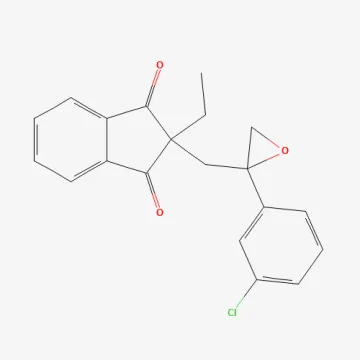
Indanofan
Description
Mode of action
Indanofan is a selective herbicide belonging to the benzoyl-pyrazole chemical class. It acts primarily through the root system of germinating weeds, making it highly effective when applied pre-emergence or at the very early stages of weed development.
The mechanism of action involves the inhibition of the phytoene desaturase enzyme, which disrupts the biosynthesis of carotenoids. This leads to the destruction of chlorophyll within plant cells, causing bleaching (chlorosis) and subsequent death of the weeds due to the cessation of photosynthesis.
Unlike many other herbicides, Indanofan demonstrates high selectivity, ensuring that the target crop remains unharmed while effectively suppressing weeds. The efficacy of the compound is highly dependent on soil moisture, as water is necessary for the substance to dissolve and move into the root zone.
Indanofan provides a prolonged protective effect, which helps to suppress subsequent flushes of weeds for several weeks. This characteristic is crucial for maintaining weed-free conditions during the early stages of crop growth when plants are most vulnerable.
The chemical stability of Indanofan in the soil ensures persistent weed control after application. This reliability allows farmers to reduce the number of necessary applications throughout the growing season, contributing to more efficient crop management.
What it targets
The primary use of Indanofan is the protection of rice crops. It is particularly effective against a wide range of grass weeds that pose a significant threat to rice yields and quality.
Indanofan excels in controlling millet-like weed species, which are notorious for their aggressive growth in paddy fields. Effective control of these species is essential for maintaining optimal harvest volumes.
Beyond grasses, the compound also shows activity against certain sedge species commonly found in rice fields. This broad-spectrum activity makes it a versatile tool for integrated weed management programs.
Application of this herbicide significantly reduces the need for manual weeding or mechanical interventions, which are often difficult or impractical in flooded rice fields.
The herbicide targets both germinating seeds and young seedlings, effectively preventing weeds from establishing themselves and spreading further across the cultivated area.
Rates and timing
Application rates for Indanofan are determined by manufacturer guidelines, depending on soil type, weed pressure, and the specific application method. Typically, the product is applied to flooded rice fields or moist soil surfaces.
The optimal timing for application is immediately after planting, before weeds emerge from the soil. Early application is critical for achieving maximum herbicidal performance and crop safety.
Achieving uniform coverage across the field is essential for ensuring that the active ingredient is concentrated in the top soil layer where weed roots are located. Precise application technology is highly recommended.
For consistent results, maintaining appropriate water levels in the rice paddies is necessary, as the herbicide's effectiveness is closely linked to soil and water conditions.
Farmers should avoid applying the product under extreme weather conditions, such as heavy rain, which could cause excessive washing or runoff beyond the target area.
Restrictions
Due to its high toxicity to aquatic organisms, Indanofan must not be used near fish-bearing waters. Adhering to buffer zones is mandatory to prevent contamination of open water sources and irrigation channels.
Personnel handling Indanofan are required to wear full personal protective equipment (PPE), including gloves, goggles, and respiratory protection, to prevent accidental skin contact or inhalation.
Crop rotation plans must account for potential soil residual effects. Indanofan may exhibit phytotoxicity to sensitive crops planted in the following season if the compound has not fully degraded.
Storage must be carried out in labeled, original containers within cool, dry, and secure facilities. Unauthorized access to the storage area must be strictly prohibited to prevent safety incidents.
Disposal of unused product and empty packaging must comply with local environmental regulations regarding hazardous chemical waste to avoid potential long-term harm to the ecosystem.
Status in the European Union
Not approved in the EU
- CAS number
- 133220-30-1
- Category (EU)
- HB - Herbicide
EU status is for reference only and does not replace national registration in your country.