
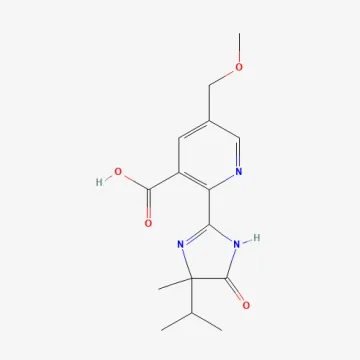
Imazamox
Description
Mode of action
Imazamox belongs to the imidazolinone chemical class. This systemic active ingredient is absorbed by plants both through the leaf surface and the root system.
The primary mechanism of action involves the inhibition of the acetolactate synthase (ALS) enzyme. This enzyme is responsible for the synthesis of essential branched-chain amino acids: valine, leucine, and isoleucine.
Blocking the synthesis of these amino acids leads to an immediate halt in cell division and growth in sensitive weeds. As a result, weeds stop competing with crops for light and nutrients.
Complete weed mortality occurs within a few weeks after application. The first visual signs of suppression, such as chlorosis and necrosis of growth points, appear within a few days.
The substance exhibits high mobility within plant tissues, allowing it to move quickly through the phloem and xylem to active growth points, ensuring effective elimination even of overgrown weeds.
What it targets
Imazamox is used to control a wide spectrum of annual broadleaf and some grass weeds in herbicide-tolerant crops. The product demonstrates high efficacy against problematic species such as Chenopodium album, Sinapis arvensis, Ambrosia artemisiifolia, and Amaranthus species.
The product effectively suppresses volunteer oilseed rape, which is particularly relevant in modern farming systems. It also controls many Polygonum species and certain thistle types, provided they are in early development stages.
The target list includes hard-to-kill weeds such as Abutilon theophrasti. However, it should be noted that efficacy against grass species may vary depending on the weed growth stage.
Due to its soil activity, Imazamox can suppress the emergence of new weed flushes for a certain period after application. This property makes it a valuable tool for protecting legume crops.
Using the product requires careful adherence to weed spectrum assessment on the field, as some species with natural tolerance to ALS inhibitors may not be fully controlled.
Rates and timing
The application rate of Imazamox depends on the weed spectrum, growth stages, and soil type. Typically, the product is applied at rates ranging from 0.02 to 0.05 kg of active ingredient per hectare.
The optimal application phase for most weeds is during active growth, specifically at the 2–4 leaf stage. For perennial weeds, timing may be adjusted according to the manufacturer’s specific recommendations.
Imazamox is most commonly used on crops such as soybeans, peas, and sunflowers developed using the Clearfield technology. Application on non-tolerant varieties or hybrids will lead to inevitable crop loss.
When used in tank mixes, it is necessary to consider component compatibility and follow the correct order of adding products to the sprayer tank. Adding adjuvants is recommended to improve the penetration of the active ingredient through the leaf cuticle.
It is important to avoid application under conditions of crop stress, such as severe drought, frost, or excessive waterlogging, as this can slow down the metabolism of the substance within the crop.
Restrictions
Imazamox is characterized by a long soil half-life, which imposes strict restrictions on crop rotation. Sensitive crops like sugar beets, rapeseed, or buckwheat may be damaged if planted in the following season.
Before planting the next crop in the rotation, deep soil tillage (plowing) is necessary to promote accelerated microbial degradation of the remaining active ingredient residues.
Application of Imazamox on fields with high organic matter content is not recommended, as this increases the sorption of the product by soil particles and reduces its herbicidal activity against weeds.
When working with the herbicide, strict safety precautions must be followed: use personal protective equipment (PPE), avoid spray drift to neighboring sensitive crops, and strictly adhere to application regulations.
Storage must be in original packaging in dry, cool warehouse areas inaccessible to children and animals, away from food and feed products.