
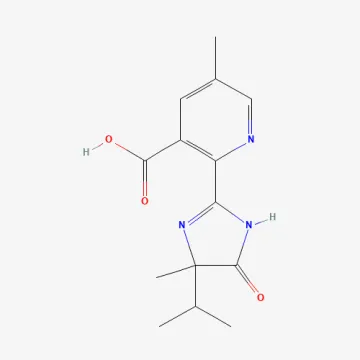
Imazapic
Description
Mode of action
Imazapic is a systemic herbicide belonging to the imidazolinone chemical class, known for its effective absorption through both leaves and roots.
The mode of action is centered on the inhibition of the acetolactate synthase (ALS) enzyme, which is vital for the biosynthesis of branched-chain amino acids.
By blocking the synthesis of valine, leucine, and isoleucine, the herbicide effectively stops cell division and halts the growth of susceptible plants.
Visible symptoms, such as chlorosis and necrosis at the growing points, typically appear several days after the application.
Plants generally cease growth immediately, and complete control is achieved within a few weeks due to the irreversible metabolic failure within the weed.
What it targets
Imazapic provides comprehensive control of a wide spectrum of annual and perennial grasses and broadleaf weeds in specific agricultural environments.
It is particularly valued for controlling difficult-to-kill species, such as ragweed, pigweed, lambsquarter, and parasitic plants like broomrape.
Beyond post-emergence control, the chemical offers significant residual soil activity, protecting fields against further flushes of weed seeds.
It is primarily utilized in leguminous crop production, such as peanuts, soybeans, and other crops demonstrating tolerance to imidazolinone chemistry.
- Common Lambsquarters
- Common Ragweed
- Redroot Pigweed
- Smartweeds
- Broomrape
Rates and timing
Application rates for Imazapic depend heavily on soil type, weed pressure, and the specific growth stages of the target vegetation.
Effective control is best achieved when the herbicide is applied during the early growth stages of weeds, ensuring optimal uptake.
Uniform distribution of the spray solution is crucial to maximize both foliar activity and the desired soil residual barrier.
When used in tank mixes, users must ensure compatibility to maintain the herbicide’s efficacy and safety for the primary crop.
Adherence to the specific manufacturer's dosage and timing instructions is mandatory for safe and efficient crop management.
Restrictions
The primary constraint associated with Imazapic is its residual persistence in the soil, which necessitates careful crop rotation planning.
Sensitive crops planted in subsequent seasons may experience phytotoxicity if the residual herbicide levels remain high in the soil profile.
Soil properties, including pH levels and organic matter content, significantly influence the degradation rate of the active ingredient.
Application should be avoided on soil types where degradation is known to be slow to prevent long-term environmental and agronomic issues.
Following labels regarding rotational crop restrictions is critical to prevent yield losses in future seasons following the use of this herbicide.
Status in the European Union
Not approved in the EU
- CAS number
- 104098-48-8
- Category (EU)
- HB - Herbicide
EU status is for reference only and does not replace national registration in your country.