
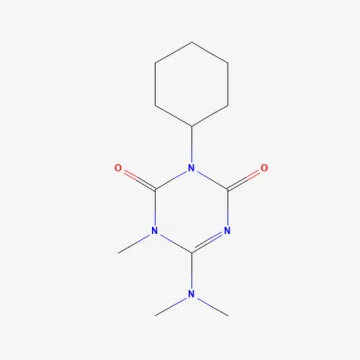
Hexazinone
Description
Mode of action
Hexazinone is a systemic herbicide belonging to the triazinone chemical class, designed for both pre-emergence and post-emergence weed control.
The mode of action is the inhibition of photosynthesis by interfering with electron transport at the photosystem II level, effectively interrupting the Hill reaction.
Once absorbed, the active ingredient is translocated through the xylem to the plant's growing points, causing systematic metabolic failure.
It exhibits high solubility and mobility in soil, which facilitates uptake by the root systems of deep-rooted perennials and woody species.
Symptoms of application include initial leaf chlorosis followed by tissue necrosis, leading to plant death over several weeks depending on environmental conditions.
What it targets
Hexazinone is used to control a broad spectrum of annual and perennial grasses and broad-leaved weeds in specific agricultural and industrial environments.
It is particularly valued for its effectiveness in clearing woody brush and trees in forestry and non-crop land management applications.
In global agriculture, it is a standard tool for weed management in sugarcane plantations where long-term residual control is required.
The compound is effective against species that are typically resistant to other classes of herbicides, especially those with extensive rhizome systems.
- Woody shrubs and broad-leaved trees
- Perennial grasses
- Deep-rooted herbaceous weeds
- Sedges
Rates and timing
Application rates are determined primarily by soil texture and organic matter content, as these factors significantly influence the herbicide's soil binding capacity.
Lower rates are typically effective on coarse, sandy soils, whereas higher doses are mandatory on heavy clay soils to achieve the desired efficacy.
Optimal timing is during the active vegetative growth phase of the target weeds to maximize the uptake of the active ingredient.
Soil moisture levels are critical, as the herbicide must be moved into the root zone via water to be absorbed effectively by the target plants.
The long residual life of the product ensures extended suppression of emerging weed seedlings throughout the growing season.
Restrictions
Due to its high activity, extreme care must be taken to prevent spray drift onto sensitive neighboring crops or non-target vegetation.
Application is prohibited in areas with shallow water tables or high runoff potential to prevent groundwater contamination due to the compound's high soil mobility.
Personal Protective Equipment (PPE) is mandatory during mixing and application to prevent dermal and inhalation exposure to the concentrated substance.
Grazing and haying restrictions are strictly enforced on treated sites for a defined period following application to ensure livestock safety.
Crop rotation plans must account for the persistent nature of hexazinone to avoid injury to susceptible crops planted in subsequent seasons.
Status in the European Union
Not approved in the EU
- CAS number
- 51235-04-2
- Category (EU)
- HB - Herbicide
EU status is for reference only and does not replace national registration in your country.