
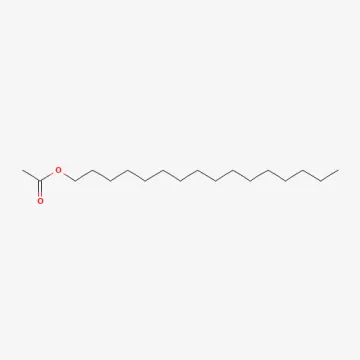
Hexadecyl acetate
Description
Mode of action
Hexadecyl acetate belongs to a class of synthetic volatile organic compounds that function as insect pheromones, specifically as attractants. Unlike traditional insecticides, this substance does not cause pest mortality through direct poisoning but acts upon their nervous and behavioral systems.
The primary mechanism of action involves mimicking the natural signals that females emit to attract males during the breeding season. A high concentration of the substance in the air leads to total disorientation in males, who become unable to locate a mate for reproduction.
A second mechanism is the use of hexadecyl acetate in pheromone traps for monitoring pest population levels. This allows agronomists to accurately determine peak flight times for pests and make informed decisions regarding the necessity of chemical treatments.
This compound is selective, ensuring high safety for beneficial entomofauna, including bees, predatory beetles, and parasitoids. It does not accumulate in the soil or food products, making it an ideal tool for integrated pest management (IPM) systems.
Hexadecyl acetate is often included in complex pheromone blends, as natural insect signals rarely consist of a single component. Synergy with other acetates allows for maximum efficiency in attracting target species.
What it targets
Hexadecyl acetate is a key component for controlling lepidopteran pests (Lepidoptera), primarily from the Noctuidae (owlet moths) and Pyralidae (snout moths) families. These insects cause significant crop damage across various growth stages.
The product is effectively used against such dangerous pests as the cotton bollworm, diamondback moth, and various leafrollers. These insect populations rapidly adapt to chemical poisons, making pheromone therapy an essential alternative.
The application of this substance is justified across a wide range of crops, including vegetables, fruits, and industrial plants. Its use is particularly effective in greenhouses, where high pest density requires precise and environmentally safe control.
Specialists use hexadecyl acetate against species with high mobility and secretive caterpillar behavior. Pheromone control allows for the interruption of the breeding cycle before eggs are laid on leaves or fruits.
- Noctuidae (Owlet moths)
- Pyralidae (Snout moths)
- Tortricidae (Leafrollers)
- Helicoverpa armigera (Cotton bollworm)
Rates and timing
The dosage of hexadecyl acetate depends on the intended use: monitoring requires minimal concentrations in dispensers, while mating disruption requires increased application rates per hectare.
The timing of pheromone dispenser placement is strictly linked to pest phenology. Installation is performed just before the start of mass adult flight, based on growing degree-day data or previous field observations.
The average operational life of a single dispenser ranges from 4 to 8 weeks, after which replacement is required. Performance depends on the intensity of solar radiation, wind speed, and air humidity, which accelerate the evaporation process of the substance.
When using traps, it is necessary to inspect their contents at least every 3–5 days. This allows for timely assessment of infestation dynamics and informs decisions regarding adjustments to field or orchard protection strategies.
It is not recommended to deviate from the dispenser placement density recommended by the manufacturer. Insufficient amounts of the substance will fail to create the necessary "pheromone cloud," rendering control efforts virtually ineffective.
Restrictions
The main limitation is the dependence of efficacy on weather conditions. Strong winds can dilute pheromone concentrations, while extreme temperatures can accelerate evaporation, shortening the period of protection.
The use of hexadecyl acetate is ineffective under conditions of very high initial pest density. In such cases, pheromones should be used only as a supplement to other protection methods rather than as the sole control strategy.
Storage of the product requires specific conditions: in a cool, dark place, within hermetically sealed packaging. If storage conditions are violated, the pheromone oxidizes and loses biological activity, becoming useless.
When handling dispensers, agronomists are advised to wear gloves to prevent skin contact with the pheromone and the transfer of scent to clothing. Accidental contamination may attract insects to the individual, causing discomfort.
The product must be disposed of according to chemical handling regulations, despite its natural origin. Reusing dispensers after their expiration date is strictly prohibited.
Status in the European Union
Approved in the EU
- CAS number
- 629-70-9
- Category (EU)
- AT - Attractant
- Approved from
- 01.09.2022
- Approval until
- 30.08.2037
EU status is for reference only and does not replace national registration in your country.