
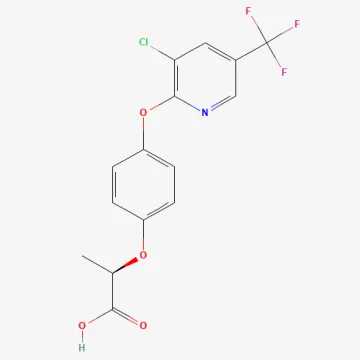
Haloxyfop-P-methyl
Description
Mode of action
Haloxyfop-P-methyl belongs to the chemical class of aryloxyphenoxypropionates, often referred to as "fops" or graminicides. It is a highly active herbicide designed for systemic control of grasses.
Once applied to the foliage, the active substance is absorbed by plant tissues and translocated via the phloem to the meristematic tissues, which are the sites of active cell division.
The primary mechanism of action is the inhibition of the enzyme acetyl-CoA carboxylase (ACCase), which is essential for fatty acid synthesis in grass species.
By disrupting lipid production, the herbicide causes the degradation of cell membranes, leading to the cessation of plant growth shortly after application.
Visual symptoms, such as yellowing and subsequent necrosis of growing points, typically appear within a few days, culminating in plant death within two to three weeks.
What it targets
This active ingredient is used to combat a wide range of annual and perennial grass weeds in broad-leaved crops.
Key perennial targets include couch grass (Elymus repens), Johnson grass (Sorghum halepense), and Bermuda grass (Cynodon dactylon).
It is also highly effective against annual grasses such as barnyard grass, foxtail species, wild oats, and common windgrass.
Due to its selective nature, it is safely used in crops such as soybeans, sunflowers, sugar beets, oilseed rape, and various horticultural crops.
It provides an essential tool for managing weed competition in systems where manual weeding is impractical and grass infestation is high.
Rates and timing
The application rate is determined by the target weed species, their growth stage, and the intensity of the infestation in the field.
For annual grasses, spraying is most effective when weeds are at the 2 to 4-leaf stage. Perennial weeds should be treated when they reach 10-15 cm in height.
The standard volume of water for application ranges from 200 to 300 liters per hectare to ensure thorough coverage of weed foliage.
Optimal results are achieved under favorable growing conditions, characterized by sufficient soil moisture and warm temperatures that promote active plant metabolism.
Avoid applying the herbicide if the crops are under stress from drought, cold, or pesticide injury, as this may reduce the herbicidal uptake and overall efficacy.
Restrictions
Haloxyfop-P-methyl must never be applied to cereal crops or other grasses like corn or sorghum, as they are susceptible and will suffer severe damage or death.
Mixing with broad-leaf herbicides should be handled with caution, as antagonism between active ingredients can occur, potentially reducing the overall weed control efficiency.
Prevent spray drift to adjacent cereal or grass-dominated areas, as even small amounts of herbicide can cause significant damage to non-target crops.
Users must adhere strictly to safety protocols, including the use of appropriate personal protective equipment (PPE) during handling and application.
Always follow local regulations regarding re-entry intervals and harvest intervals to ensure food safety and minimize environmental exposure.
Status in the European Union
Not approved in the EU
- CAS number
- 95977-29-0
- Category (EU)
- HB - Herbicide
- Approved from
- 01.01.2011
- Approval until
- 31.12.2020
- ADI
- 0.00065 mg/kg bw/day
- ARfD
- 0.075 mg/kg bw
- AOEL
- 0.005 mg/kg bw/day
EU status is for reference only and does not replace national registration in your country.