
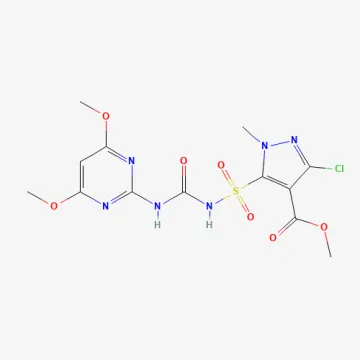
Halosulfuron-methyl
Description
Mode of action
Halosulfuron-methyl is a systemic, selective herbicide belonging to the sulfonylurea chemical class, widely used in professional agricultural weed management.
Its primary mode of action is the inhibition of the acetolactate synthase (ALS) enzyme, which is essential for the biosynthesis of branched-chain amino acids.
By preventing the production of valine, leucine, and isoleucine, the herbicide effectively halts plant cell division and subsequent growth in target weeds.
The substance is absorbed through both foliage and roots, moving rapidly through the plant's vascular system to accumulate in active meristematic tissues.
Visible signs of plant death typically follow a pattern of chlorosis and necrosis at the growing points, eventually leading to the collapse of the weed.
What it targets
This active ingredient is particularly valued for its effectiveness against hard-to-control perennial weeds, most notably species within the Cyperaceae family.
It provides significant control over a wide range of broadleaf weeds that commonly compete with essential cereal and technical crops for resources.
Targeting specific competitive species helps to maintain crop yield potential and ensures fields remain free of persistent weed infestations.
The product's ability to tackle deep-rooted weeds makes it a staple in integrated pest management programs globally.
- Purple nutsedge (Cyperus rotundus)
- Amaranth species (Amaranthus spp.)
- Velvetleaf (Abutilon theophrasti)
- Common cocklebur (Xanthium strumarium)
Rates and timing
Optimal application timing occurs during the active growth phase of the target weeds, when they are most susceptible to herbicide uptake and translocation.
Application rates are determined by factors such as weed density, the growth stage of the crop, and environmental conditions at the time of field treatment.
Proper calibration of spray equipment is essential to ensure consistent droplet distribution and effective coverage across the field surface.
When tank-mixing, growers should confirm the chemical compatibility of the herbicide with other products to prevent precipitation or loss of efficacy.
Regular field scouting is recommended post-application to monitor weed control progress and confirm the success of the herbicide treatment regimen.
Restrictions
Care must be taken to avoid herbicide drift onto adjacent sensitive crops, as the systemic nature of the product can cause significant damage to non-target plants.
Crop rotation restrictions must be observed, as residual halosulfuron-methyl in the soil can potentially affect sensitive species planted in subsequent seasons.
Application under extreme environmental stress, such as drought or freezing temperatures, is discouraged as it can decrease control and increase crop sensitivity.
Strict adherence to personal protective equipment protocols is necessary to minimize dermal and respiratory exposure for agricultural workers.
Proper storage in original, sealed containers within a climate-controlled environment is crucial to maintaining the stability and safety of the active substance.
Status in the European Union
Approved in the EU
- CAS number
- 100784-20-1
- Category (EU)
- HB - Herbicide
- Approved from
- 01.10.2013
- Approval until
- 15.11.2026
- ADI
- 0.063 mg/kg bw/day
- ARfD
- 0.5 mg/kg bw
- AOEL
- 0.063 mg/kg bw/day
EU status is for reference only and does not replace national registration in your country.