

ANTI-STRESS (CLIMATE PLUS, GROUS-2)
ПП «ВКФ «Імпторгервіс», Україна
Plant Growth Regulator
0
0
·
55
2 offers
22 624 €per 1000 pcs
Buy
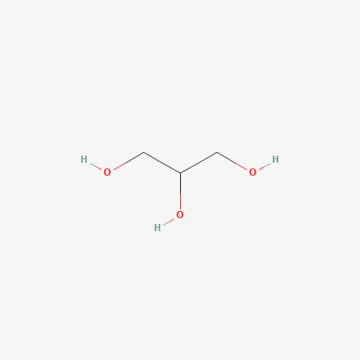
Glycerin (propane-1,2,3-triol) is classified in agricultural practice as an auxiliary substance or adjuvant. It is not an independent pesticide, but significantly modifies the physicochemical properties of working solutions.
The primary mechanism of action of glycerin is its hygroscopicity. When applied to the plant surface, it slows down the evaporation of the working solution droplets, retaining moisture for longer.
By maintaining a liquid phase on the plant cuticle for an extended period, glycerin facilitates deeper and more complete penetration of pesticide active ingredients into the plant tissues.
The substance acts as a stabilizer, preventing the crystallization of active ingredients during the rapid drying of droplets under the influence of sunlight or high air temperatures.
Glycerin reduces the surface tension of the solution, ensuring uniform distribution of pesticides across the leaf blade and minimizing the risk of droplet runoff.
Glycerin is used to improve the performance of a wide range of products: herbicides, insecticides, and fungicides, especially those with systemic action.
It is most effective when working with contact preparations, where complete coverage of the pest or pathogen surface is critical.
It is used for treating crops with thick waxy coatings or coarse pubescence, which are poorly wetted by conventional aqueous solutions.
It is applied to increase the efficiency of foliar micro-fertilizer applications, facilitating their absorption by plant cells through the stomata.
The application rate of glycerin in tank mixes is usually calculated as a percentage of the total working solution volume and ranges from 0.1% to 0.5%.
The precise dosage depends on weather conditions: in low humidity and high temperature environments, it is advisable to increase the adjuvant concentration.
Application is recommended at all stages of vegetation, but it is most justified during periods of active growth when the leaf area is fully developed.
Compatibility with specific pesticides requires a preliminary sedimentation test to avoid deactivation of active ingredients within the tank mix.
Pre-harvest intervals when using glycerin are determined solely by the regulations of the pesticide with which it is mixed.
It is not recommended to use glycerin in conditions of excessively high humidity, as excessive moisture retention can promote the development of fungal infections.
It is important to avoid exceeding the recommended rates, as an overly high concentration can lead to phytotoxicity due to excessive absorption of the pesticide.
During handling, it is necessary to use personal protective equipment for skin and respiratory organs, although glycerin is considered a low-toxicity compound.
The product should be stored in tightly closed containers, away from direct sunlight, to prevent changes in its chemical stability.
Mixing with strong oxidizing agents is prohibited, as this may trigger unpredictable chemical reactions in the sprayer tank.