
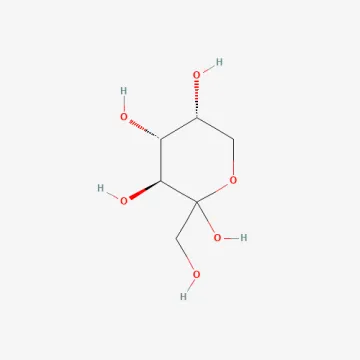
Fructose
Description
Mode of action
Fructose in agrochemistry belongs to the group of monosaccharides, which are actively used not as independent pesticides, but as essential components in multifunctional adjuvants and growth regulators.
The mechanism of action is based on the ability of the fructose molecule to easily penetrate through the leaf cuticle, delivering attached micronutrients or pesticide active ingredients directly into plant cells.
These compounds act as endogenous energy sources, triggering metabolic processes when crops are subjected to abiotic stresses such as drought or frost.
Fructose contributes to improving tissue turgor and stabilizing cell membranes, which is critical when used in tank mixtures with herbicides to reduce their phytotoxic effects.
In soil microbiology, fructose serves as an easily accessible carbohydrate substrate that stimulates the activity of beneficial rhizosphere microflora, indirectly improving crop nutrition.
What it targets
Used to increase the resistance of agricultural crops to environmental stress factors, including high temperatures and moisture deficits.
Used as a component of chelate complexes for micronutrient fertilizers, improving the absorption of copper, zinc, and iron through the leaf surface.
Applied to mitigate pesticide stress that occurs after field treatments with aggressive herbicides by accelerating metabolic processes in leaves.
It is part of sticking agents (adjuvants) to prolong the effect of fungicides, preventing them from being washed away by rain and ensuring better adhesion of solution droplets to the epidermis.
- Increasing the immune status of cereals.
- Improving sugar content in fruit and berry crops during ripening.
- Stimulating root system development in young seedlings.
Rates and timing
Application rates for fructose-containing products depend heavily on the intended use: for anti-stress treatments, concentrations of up to 0.5–1.0% of the working solution are usually used.
In tank mixtures with pesticides, the dosage is adjusted according to the manufacturer's recommendations for the adjuvant product to ensure the stability of the base composition.
Application timings cover all key growth stages, but the most effective time is during periods of intensive growth or after the impact of adverse weather conditions.
For foliar feeding, it is important to spray in the early morning or evening hours to prevent the working solution from drying out too quickly on the leaf surface.
Application must be strictly regulated by the growth stage of the crop to exclude the risk of excessive sugar accumulation, which could attract pests.
Restrictions
Fructose is a biodegradable compound, so its shelf life in ready-to-use formulations is limited and requires strict temperature control.
Simultaneous use with strong oxidizing agents is not recommended, as this leads to the chemical degradation of monosaccharides and the loss of their beneficial properties.
High hygroscopicity of the products is a limitation, so it is important to use them immediately after preparing the tank mixture, avoiding long-term storage.
It is necessary to monitor the pH of the working solution, as extremely acidic or alkaline environments can trigger unwanted reactions with other components of the formulation.
Application on fields with a high risk of rot infection requires caution, as an excess of available carbohydrates on plant surfaces can stimulate the growth of fungal pathogens.
Status in the European Union
Approved in the EU
- CAS number
- 57-48-7
- Category (EU)
- EL - Elicitor
- Approved from
- 17.07.2020
- ADI
- Not appl.
- ARfD
- Not appl.
- AOEL
- Not appl.
EU status is for reference only and does not replace national registration in your country.