
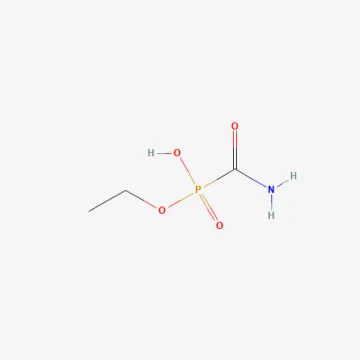
Fosamine
Description
Mode of action
Fosamine belongs to the class of plant growth regulators that exhibit herbicidal activity. Its mechanism of action is based on the inhibition of meristematic tissue development, which leads to growth retardation and eventual plant death.
Unlike standard systemic herbicides, fosamine effectively interferes with the synthesis of key enzymes involved in cell division. This causes significant developmental deformities in the plant, eventually leading to its collapse.
The substance is primarily absorbed through leaves and young shoots, then translocated throughout the plant's vascular system. Effectiveness is largely dependent on the metabolic activity of the target vegetation during the time of application.
Fosamine is particularly noted for its ability to suppress woody and shrubby regrowth. This property is widely utilized for maintenance in non-cropland areas, industrial sites, and drainage channels.
The compound offers a degree of selectivity, allowing for effective control of specific woody weeds without causing total destruction of desired grasses or stable crop varieties when applied at registered rates.
What it targets
This group of chemicals is highly effective at controlling a broad spectrum of woody and shrubby species, as well as perennial weeds that are resistant to other common herbicide classes.
Target species commonly include willow, aspen, birch, and other brush varieties that interfere with land management and reduce the productivity of pastures and rights-of-way.
The chemical is vital for maintaining drainage systems and utility corridors, where it prevents excessive growth that could damage infrastructure or impede water flow.
In certain agricultural systems, fosamine is utilized as a desiccant to promote even ripening and facilitate the mechanical harvesting process, particularly for specific seed crops.
- Woody and shrubby regrowth
- Perennial brush and vine species
- Invasive vegetation on non-cropland
Rates and timing
Application rates for fosamine are determined by the target vegetation species, density of the infestation, and the growth stage of the plants. Higher concentrations are typically required for woody brush control.
Optimal timing is crucial; applications are most successful during the period of active sap flow, ensuring the chemical is efficiently distributed throughout the plant's vascular system.
Proper coverage is essential, as the effectiveness of fosamine depends on sufficient leaf surface area absorption to reach systemic levels within the target tissues.
When used as a desiccant, precise timing relative to the physiological maturity of the crop is necessary to ensure harvest quality and compliance with residue tolerances.
Growers should consult the specific product label for precise dilution ratios and mixing requirements to ensure maximum efficacy while preventing unnecessary environmental exposure.
Restrictions
Fosamine application requires strict attention to environmental conditions. It should not be applied under extreme heat, drought stress, or during periods of precipitation that may cause runoff.
Off-target movement must be strictly prevented, as the systemic nature of the compound can cause significant damage to non-target crops and ornamental vegetation.
The use of personal protective equipment (PPE) is mandatory for all handlers to minimize dermal and respiratory exposure to the concentrate or spray mixture.
Environmental safety protocols must be observed to prevent any contamination of surface waters, ponds, or groundwater sources through spray drift or leaching.
Equipment sanitation is critical after application; remaining residues must be thoroughly cleaned from tanks and nozzles to prevent damage when the equipment is next used for different treatments.
Status in the European Union
Not approved in the EU
- CAS number
- 59682-52-9
- Category (EU)
- HB - Herbicide
EU status is for reference only and does not replace national registration in your country.