
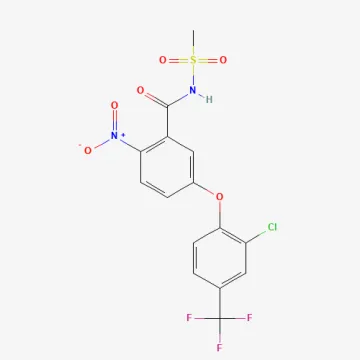
Fomesafen
Description
Mode of action
Fomesafen belongs to the chemical class of diphenyl ethers. It acts as a selective herbicide through the inhibition of the protoporphyrinogen oxidase (PPO) enzyme.
By inhibiting this enzyme, the active ingredient disrupts chlorophyll synthesis within plant cells. This disruption leads to the accumulation of toxic intermediates that rapidly destroy cellular membranes.
The substance primarily acts through contact with the foliage of target plants. It also exhibits residual soil activity, which helps to suppress late-emerging weeds for a period after the application.
Symptoms of weed necrosis appear within a few hours of treatment as the chemical causes cellular damage upon exposure to sunlight. The rapid reaction leads to the desiccation and death of the plant.
Crop selectivity is achieved because the target crops, such as soybeans, possess biological mechanisms to metabolize the herbicide into inactive compounds quickly, ensuring safety for the harvest.
What it targets
Fomesafen is used to control a broad spectrum of annual broadleaf weeds. It is highly valued for managing populations that have developed resistance to other common herbicide classes.
- Amaranthus species (pigweeds)
- Ambrosia artemisiifolia (common ragweed)
- Datura stramonium (jimsonweed)
- Abutilon theophrasti (velvetleaf)
- Polygonum species (smartweeds)
Rates and timing
Application is most effective when weeds are actively growing, specifically in the 1 to 3 true leaf stage. Dosage should be adjusted based on local weed pressure and soil moisture levels.
Standard spray volumes range from 200 to 300 liters per hectare. Achieving uniform and thorough coverage of the leaf canopy is critical for obtaining optimal herbicidal results.
Precision spray technology is recommended to maintain the required droplet size. Environmental conditions, specifically temperatures between +15°C and +25°C, favor the uptake and efficacy of the active ingredient.
Avoid applying the herbicide when crops are under stress from drought, extreme temperature fluctuations, or severe insect infestations, as this increases the risk of crop phytotoxicity.
The inclusion of non-ionic surfactants or oil-based adjuvants in the spray solution is generally recommended to enhance the penetration of the herbicide through the weed cuticle.
Restrictions
Fomesafen has soil residual characteristics, which may limit crop rotation options. Farmers should consult labels for safe plant-back intervals for subsequent crops.
Strict adherence to wind speed limitations is required to prevent off-target drift. Buffer zones must be established near sensitive areas, including water bodies and pollinator habitats.
It is generally advised not to tank-mix fomesafen with graminicides to avoid potential antagonism, which can reduce the effectiveness of controlling grassy weeds in the same field.
Protective clothing, gloves, and eye protection are mandatory when handling or applying this herbicide. It is classified as moderately toxic, requiring proper safety protocols.
Storage should be in a cool, dry, and well-ventilated location, away from direct sunlight. The product should be kept in original containers within a temperature range of -10°C to +35°C.
Status in the European Union
Not approved in the EU
- CAS number
- 72178-02-0
- Category (EU)
- HB - Herbicide
EU status is for reference only and does not replace national registration in your country.