
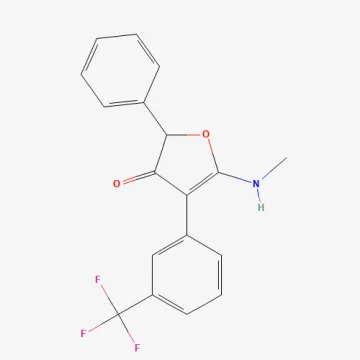
Flurtamone
Description
Mode of action
Flurtamone belongs to the phenylpyrrolidinone chemical class and functions as a selective herbicide used primarily in pre-emergence weed control.
It acts by inhibiting the enzyme phytoene desaturase, which is essential for the biosynthesis of carotenoids in young plant tissues.
Without functional carotenoids, chlorophyll molecules are destroyed by photo-oxidation, leading to the bleaching of newly emerged leaves and shoots.
The herbicide is primarily absorbed by the roots and hypocotyls of germinating weeds, preventing their development shortly after germination.
This systemic action ensures that target weeds are neutralized before they can compete significantly with the developing crop plants.
What it targets
Flurtamone is highly effective in controlling a wide range of annual broad-leaved weeds in various agricultural crop systems.
It is specifically valued for its activity against difficult-to-control species such as Chenopodium album, various Polygonum species, and Capsella bursa-pastoris.
The herbicide is also efficient in managing Viola arvensis and several other cruciferous weeds that pose a threat to cereal crop establishment.
By providing early-season control, Flurtamone significantly reduces the density of competitive weeds, allowing the crop to establish a stronger root system.
It is often used as a foundation for integrated weed management programs to lower the pressure from dicotyledonous weeds.
Rates and timing
Application rates of Flurtamone depend on soil type, specifically the organic matter content, and the expected weed pressure in the field.
It is typically applied to the soil surface shortly after sowing but before the crop emergence to establish an effective protective layer.
Optimal soil moisture is crucial for the activation and uptake of the active ingredient, ensuring consistent weed control performance.
In tank-mix formulations, Flurtamone can be combined with other herbicides to broaden the spectrum of weeds controlled during the early growth stages.
Agrotechnical timing should be strictly observed to maximize selectivity, ensuring the crop remains safe while weeds are effectively suppressed.
Restrictions
Avoid applying Flurtamone on sandy soils or soils with extremely low organic matter to mitigate the risk of crop phytotoxicity.
Mechanical soil cultivation after application should be minimized to preserve the integrity of the herbicide layer on the soil surface.
Spray drift must be strictly prevented to protect surrounding areas and sensitive non-target vegetation from exposure.
Performance may be reduced under severe drought conditions due to the lack of sufficient moisture required for herbicide activation.
- Always wear appropriate personal protective equipment (PPE).
- Dispose of chemical containers according to local environmental regulations.
- Prevent any contamination of groundwater or open water bodies.
Status in the European Union
Not approved in the EU
- CAS number
- 96525-23-4
- Category (EU)
- HB - Herbicide
- Approved from
- 01.01.2004
- Approval until
- 27.12.2018
- ADI
- 0.03 mg/kg bw/day
- ARfD
- 0.5 mg/kg bw
- AOEL
- 0.05 mg/kg bw/day
EU status is for reference only and does not replace national registration in your country.