
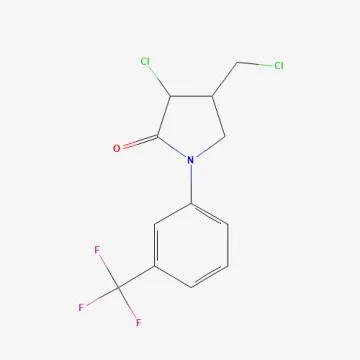
Flurochloridone
Description
Mode of action
Flurochloridone belongs to the pyrrolidinone chemical class. It is a selective herbicide that acts primarily through the soil and is absorbed by the seeds and roots of germinating weeds.
The mode of action is based on the inhibition of the phytoene desaturase enzyme. This leads to a blockage in the biosynthesis of carotenoids, which protect chlorophyll from photo-oxidative degradation.
In the absence of carotenoids, chlorophyll is rapidly destroyed under sunlight. As a result, plants lose pigmentation and bleach, leading to the death of the weed species.
The substance is characterized by strong soil activity, creating a herbicide layer in the upper topsoil. This effectively prevents the germination and emergence of weed seedlings.
The efficacy of the preparation directly depends on soil moisture, as moisture is required after application to activate the active ingredient molecules.
What it targets
The herbicide effectively controls a wide spectrum of annual broad-leaved and some grassy weeds. It is essential for managing species that demonstrate resistance to other herbicide classes.
- Chenopodium album (Common lambsquarters)
- Solanum nigrum (Black nightshade)
- Amaranthus retroflexus (Redroot pigweed)
- Polygonum species (Smartweeds)
- Matricaria chamomilla (Wild chamomile)
The product demonstrates high effectiveness against stubborn weeds such as Galium aparine (Cleavers). Its action is targeted at suppressing seedlings at the moment of emergence.
A key advantage is the control of weeds during their germination stage, which alleviates competition pressure on the crop during its critical developmental period.
Rates and timing
Application rates of flurochloridone depend on soil type: heavy loam soils with high organic matter require higher dosages, while light sandy soils require minimal rates.
The primary timing for application is pre-sowing or pre-emergence of the crop. This ensures the field remains clean during the formation of the initial root system.
The volume of the spray solution should ensure uniform coverage of the soil surface. It is recommended to use standard agricultural sprayers with high-quality nozzles.
When using in tank mixtures, it is necessary to consider the compatibility of the components. Preliminary testing for sediment precipitation is highly recommended.
Restrictions
Flurochloridone possesses high soil persistence, therefore, crop rotation restrictions must be considered when planning subsequent crops.
Mechanical soil cultivation is not recommended immediately after herbicide application, as it may disrupt the protective soil layer and reduce efficacy.
In drought conditions, the efficacy of the product may significantly decrease. Rainfall or irrigation is necessary to trigger herbicidal activity.
Personal protective equipment must be used during handling. The product can cause irritation to the skin and mucous membranes, so strict adherence to safety protocols is mandatory.
Avoid spray drift onto neighboring sensitive crops. Always account for wind direction and air speed during field operations.
Status in the European Union
Approved in the EU
- CAS number
- 61213-25-0
- Category (EU)
- HB - Herbicide
- Approved from
- 01.06.2011
- Approval until
- 31.10.2027
- ADI
- 0.04 mg/kg bw/day
- ARfD
- 0.04 mg/kg bw
- AOEL
- 0.04 mg/kg bw/day
EU status is for reference only and does not replace national registration in your country.