

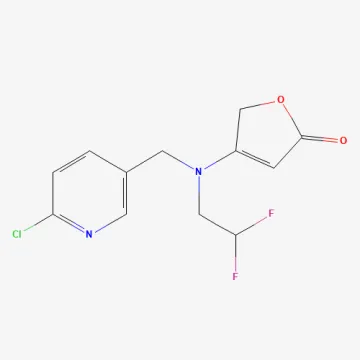
Description
Mode of action
Flupyradifurone belongs to the butenolide chemical class, representing a novel mode of action for controlling agricultural insect pests.
It acts as an agonist of nicotinic acetylcholine receptors (nAChR) within the insect nervous system, inducing paralysis and feeding cessation.
The substance is characterized by excellent systemic properties, allowing it to move rapidly within the plant tissue through the xylem.
Due to its unique binding site, flupyradifurone is highly effective against insect populations that have developed resistance to traditional neonicotinoids.
The fast-acting nature of this compound ensures quick knockdown effects, protecting the plant from damage caused by both direct feeding and virus transmission.
What it targets
The primary targets for this group of insecticides are various sucking insect pests that cause significant economic losses in global agriculture.
Key pests controlled include various aphid species, greenhouse and tobacco whiteflies, as well as leafhoppers and specific scale insects.
Its systemic efficacy makes it a versatile tool for managing infestations in diverse crops, including fruits, vegetables, and ornamental plants.
By controlling vector insects, flupyradifurone plays a crucial role in preventing the spread of secondary plant viral diseases.
- Aphids (various species)
- Whiteflies (e.g., Bemisia tabaci)
- Leafhoppers
- Scale insects
Rates and timing
Application rates typically range between 0.2 and 0.5 liters per hectare, depending on the crop type and the density of the pest population.
It is recommended to apply the product at the earliest signs of infestation to achieve maximum protective efficiency and prevent population explosions.
The volume of the spray solution should ensure complete and uniform coverage of all vegetative surfaces for optimal uptake by the plant.
Care should be taken to follow specific label recommendations regarding seasonal limitations to prevent the development of resistant pest strains.
The timing of application should coincide with the active growth phase of the pest to ensure the most effective physiological interaction.
Restrictions
While exhibiting a favorable safety profile, it is strictly prohibited to apply the product during periods of pollinator activity in the field.
Operators must wear appropriate personal protective equipment (PPE) during handling, mixing, and application to minimize human exposure.
Always adhere to local regulations regarding pre-harvest intervals (PHI) to ensure the safety of food products intended for consumption.
Mixing with highly alkaline agents must be avoided, as this can degrade the active substance and compromise its performance in the field.
Store in original containers in cool, dry, and well-ventilated areas, away from children, food, and animal feed to prevent accidents.
Regulatory
Status in the European Union
Approved in the EU
- CAS number
- 951659-40-8
- Category (EU)
- IN - Insecticide
- Approved from
- 09.12.2015
- Approval until
- 09.06.2029
- ADI
- 0.064 mg/kg bw/day
- ARfD
- 0.15 mg/kg bw
- AOEL
- 0.064 mg/kg bw/day
EU legislation
EU status is for reference only and does not replace national registration in your country.
Content graph
Connections · Flupyradifurone
Most often together:
Marketplace