
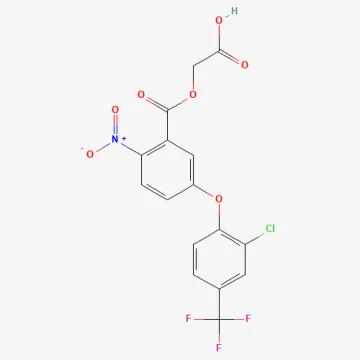
Fluoroglycofen
Description
Mode of action
Fluoroglycofen belongs to the diphenyl ether chemical class and is a highly selective contact herbicide primarily absorbed through the foliage of weeds.
Its mode of action involves inhibiting the enzyme protoporphyrinogen oxidase (PPO), which plays a critical role in the chlorophyll biosynthesis pathway of plants.
Blocking this enzyme leads to the accumulation of intermediate compounds, causing rapid cell membrane disruption when exposed to light.
Weeds show symptoms of chlorosis and tissue necrosis within hours, leading to complete desiccation of sensitive plant species shortly after application.
The herbicide is known for its high activity even under cooler spring conditions, making it an efficient choice for early-season weed management programs.
What it targets
Fluoroglycofen is primarily used to control a broad spectrum of annual and perennial broad-leaved weeds in various agricultural crop systems.
It effectively targets common problematic weeds such as Chenopodium album, Amaranthus species, Polygonum species, Ambrosia artemisiifolia, and Solanum nigrum.
It is widely utilized in soybean and cereal crops, as well as legumes, where it demonstrates excellent selectivity and safety for the main crop.
- Common lambsquarters
- Pigweed species
- Smartweed species
- Common ragweed
- Black nightshade
Rates and timing
Application rates for fluoroglycofen depend heavily on the growth stage of the weeds and the density of the infestation present in the field.
The most effective control is achieved when weeds are at the young growth stage, typically between 2 to 4 true leaves, ensuring maximum absorption.
Applying the product during active growth periods maximizes the herbicidal efficacy and ensures consistent results across the treated area.
When used in tank mixes with other pesticides, users must verify compatibility and adjust rates according to label requirements and manufacturer guidelines.
High-quality spray coverage is essential; therefore, equipment calibration must ensure uniform droplets to cover the target weeds thoroughly.
Restrictions
Personal protective equipment (PPE) is mandatory when handling fluoroglycofen to prevent skin contact and inhalation of spray mist during mixing or spraying.
Application should be avoided if the crop is under environmental stress, such as drought, extreme heat, or damage from previous frost or pests.
Care must be taken to prevent spray drift onto non-target crops or sensitive areas, especially during windy conditions, to avoid unintended damage.
Users should be aware of crop rotation restrictions to ensure that residues do not interfere with subsequent plantings in the field.
Products containing this active substance must be stored in original, tightly sealed containers in a cool, dry, and secure location away from children.
Status in the European Union
Not approved in the EU
- CAS number
- 77501-60-1
- Category (EU)
- HB - Herbicide
EU status is for reference only and does not replace national registration in your country.