
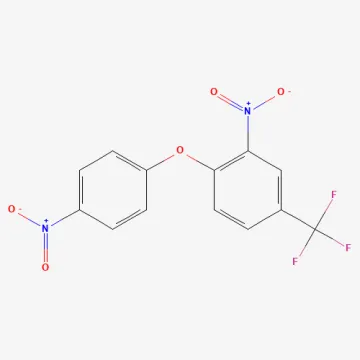
Fluorodifen
Description
Mode of action
Fluorodifen is a contact herbicide belonging to the diphenyl ether chemical class, designed to provide selective control of unwanted broadleaf weeds in various crops.
The mechanism of action involves the inhibition of photosynthesis in target plants, which triggers the destruction of cell membranes through lipid peroxidation.
Because the substance acts primarily through contact, the spray coverage must be thorough to ensure that the active compound reaches all parts of the weed foliage.
Once applied, the herbicide causes rapid desiccation of the green tissues, leading to the eventual death of the sensitive weed species within a short time frame.
The compound's selectivity allows it to be used in specific crops that can physiologically neutralize the active ingredient, ensuring safety for the cultivated plant.
What it targets
Fluorodifen is primarily used to combat a wide range of annual broadleaf weeds that compete with crops for essential nutrients and sunlight during the early growth stages.
Target weeds include species such as common lambsquarters, pigweed, and various knotweeds that are sensitive to this specific diphenyl ether compound.
The herbicide is most effective when applied at the seedling stage or during the early development phase of the weeds, specifically before they exceed the two-to-four leaf stage.
While effective against many annuals, it is not recommended for the control of deep-rooted perennial weeds, as the contact action does not affect the subterranean parts.
Using this herbicide helps maintain clean fields, providing the crop with a competitive advantage during the critical initial phases of the growing season.
Rates and timing
Application rates for fluorodifen should be strictly followed according to the manufacturer's label, considering the specific crop type and weed density.
Optimal timing is crucial for success; treatments must be applied when weeds are actively growing to ensure the highest level of absorption by the leaves.
Environmental conditions, such as high solar intensity, can enhance the efficacy of the herbicide, as the process is light-dependent.
Water volume should be adjusted to achieve proper coverage without causing excessive runoff, which could reduce the concentration of the active substance on the target surface.
It is recommended to check the specific compatibility with other tank-mix partners to ensure that the herbicide's activity is not compromised by chemical interactions.
Restrictions
Safety is a priority when handling fluorodifen; personnel must wear appropriate protective clothing, gloves, and eye protection to avoid skin and mucosal irritation.
Drift management is essential to prevent unintended exposure of neighboring crops or environmentally sensitive areas to the herbicide solution.
Avoid applying the product if heavy rainfall is expected, as significant wash-off may occur, which would render the herbicide treatment ineffective.
Storage should be conducted in secure, well-ventilated areas, ensuring that the containers remain sealed and protected from extreme temperatures and direct sunlight.
Disposal of unused herbicide and empty containers must follow local environmental regulations to prevent contamination of soil and water resources.
Status in the European Union
Not approved in the EU
- CAS number
- 15457-05-3
- Category (EU)
- HB - Herbicide
EU status is for reference only and does not replace national registration in your country.