
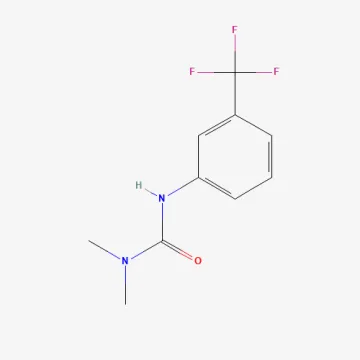
Fluometuron
Description
Mode of action
Fluometuron belongs to the phenylurea class of chemical compounds. It acts as a systemic herbicide that is primarily absorbed by the root system of plants, though it can also be taken up through foliage.
The primary mode of action is the inhibition of photosynthesis. By interfering with the Hill reaction, the substance blocks electron transport in photosystem II, which effectively stops plant growth and leads to the death of the weeds.
The chemical provides excellent residual activity in the soil, creating a chemical barrier that prevents subsequent weed seeds from germinating over several weeks.
Selectivity in crops like cotton is achieved through the plant's metabolic capacity to degrade and detoxify the compound before it reaches concentrations that could interfere with its own physiological processes.
Environmental conditions, particularly soil moisture levels, play a critical role in the herbicide's availability and its effectiveness in controlling weeds in the crop root zone.
What it targets
Fluometuron is highly effective at controlling a wide range of annual broadleaf weeds and some grass species that compete with field crops.
It is widely utilized for managing common weeds that are often problematic in cotton production systems, ensuring the crop has a competitive advantage during early development.
- Redroot pigweed
- Common lambsquarters
- Wild mustard
- Common purslane
- Large crabgrass
The herbicide spectrum covers numerous dicotyledonous species, making it a staple tool in integrated weed management strategies within cotton-growing regions.
The effectiveness against specific weed populations can be influenced by the soil type and the specific timing of application relative to the germination cycle of the weeds.
Rates and timing
Application rates are determined by soil characteristics, specifically clay content and organic matter levels. Lower rates are generally required on lighter, sandy soils to prevent crop injury.
Moisture is essential for the activation of fluometuron. Ideally, the herbicide should be applied when there is sufficient soil moisture or followed by a light irrigation or rainfall event.
Pre-emergence application is the standard practice, applied after planting but before weeds and crop seedlings emerge from the soil surface.
In post-emergence scenarios, application must be managed carefully to minimize contact with the crop foliage, following specific label guidelines regarding plant height and growth stage.
Farmers should always refer to the specific product label to determine the exact dosage required for their particular soil and crop conditions.
Restrictions
Exceeding recommended dosage rates poses a significant risk of phytotoxicity to the crop, which can lead to stunted growth and reduced yields.
Applications should not be made when crops are under stress due to adverse weather conditions, pests, or diseases, as the crop's ability to metabolize the chemical is compromised under these conditions.
Users must adhere to strict safety protocols, including the use of personal protective equipment, to minimize exposure during handling and application of the product.
Potential residual effects on subsequent crops must be considered when planning crop rotations, as certain species may be sensitive to fluometuron residues in the soil.
Disposal of empty containers and wash-water must follow local environmental regulations to prevent contamination of groundwater and non-target areas.
Status in the European Union
Approved in the EU
- CAS number
- 2164-17-2
- Category (EU)
- HB - Herbicide
- Approved from
- 01.06.2011
- Approval until
- 15.01.2030
- ADI
- 0.0005 mg/kg bw/day
- ARfD
- 0.008 mg/kg bw
- AOEL
- 0.008 mg/kg bw/day
EU status is for reference only and does not replace national registration in your country.