
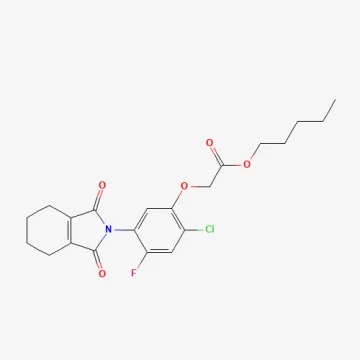
Flumiclorac-pentyl
Description
Mode of action
Flumiclorac-pentyl belongs to the N-phenylphthalimide chemical class and functions as a powerful contact herbicide. Its primary mode of action is the inhibition of the protoporphyrinogen oxidase (PPO) enzyme.
By blocking this enzyme, the compound causes the accumulation of intermediate compounds within weed cells, leading to rapid photo-oxidation and the destruction of cellular membranes.
This substance is highly selective, showing potent effects on actively growing young weeds while remaining safe for specific crops when applied according to the label.
The herbicidal effect is light-dependent, meaning sunlight is necessary to trigger the biochemical destruction of plant tissues, ensuring quick results after application.
Due to its contact nature, the herbicide quickly enters the leaves, effectively stopping weed development and reducing resource competition with the main crop.
What it targets
Flumiclorac-pentyl is primarily used to control a broad range of annual broadleaf weeds that threaten the productivity of agricultural fields.
Targeted weeds include common species such as lambsquarter, amaranth, common ragweed, and various members of the buckwheat family.
It is specifically valued for its efficiency in soybean production, providing a reliable shield against weeds that thrive in similar environmental conditions.
The product is highly effective against weed populations that have developed resistance to other common herbicide groups, including ALS inhibitors.
Consistent application helps maintain field hygiene, preventing weeds from reaching stages where they would significantly damage crop yields.
Rates and timing
The dosage of Flumiclorac-pentyl depends on the specific weed species present, their development stage, and the growth phase of the cultivated crop.
The most effective application window is when weeds are in the seedling stage, typically from cotyledons to the two-true-leaf stage, when they are most susceptible.
The inclusion of high-quality surfactants is recommended to improve spray droplet adhesion to leaf surfaces and enhance the overall penetration of the active ingredient.
Application should be avoided during times of severe environmental stress, such as extreme heat or drought, to minimize the risk of phytotoxicity to the crop.
Proper spray equipment calibration is essential to ensure uniform coverage and consistent performance across the entire treated area.
Restrictions
Strict adherence to safety protocols is mandatory when handling and applying Flumiclorac-pentyl to ensure both operator safety and environmental protection.
Drift management is critical; spray must not reach adjacent sensitive crops, as contact can cause severe injury or stunted growth in non-target plants.
Operators must wear appropriate personal protective equipment, including respirators, gloves, and protective clothing, to prevent direct skin or eye contact.
All application equipment must be thoroughly cleaned after use following manufacturer recommendations to prevent contamination for future tasks.
Storage should be limited to original containers in a cool, dry, and well-ventilated area, kept strictly out of reach of children and unauthorized personnel.
Status in the European Union
Not approved in the EU
- CAS number
- 87546-18-7
- Category (EU)
- HB - Herbicide
EU status is for reference only and does not replace national registration in your country.