
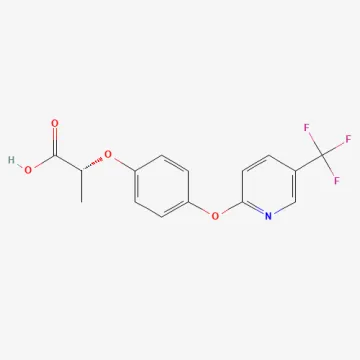
Fluazifop-P-butyl
Description
Mode of action
Fluazifop-P-butyl belongs to the aryloxyphenoxypropionate chemical class and acts as a selective, systemic herbicide targeting grass species.
The mechanism involves the inhibition of the enzyme acetyl-CoA carboxylase (ACCase), which is essential for fatty acid synthesis in plant cells.
After foliar application, the substance is quickly translocated via the phloem to the roots and growing points, effectively halting growth.
Initial symptoms of plant death appear as chlorosis within a week, followed by necrosis, leading to complete weed eradication within two to three weeks.
Its high selectivity ensures that broad-leaved crops remain unharmed while specifically targeting the metabolic processes of graminaceous weeds.
What it targets
The active ingredient is designed to control a wide range of annual and perennial grass weeds, including couch grass, barnyard grass, and crabgrass.
It is particularly effective against cereal volunteers, making it an essential tool for protecting crops like oilseed rape, soybeans, and sugar beets.
By translocating deep into the root systems, the herbicide prevents the regrowth of perennial grasses that spread through rhizomes.
It helps farmers eliminate competitive pressure from grasses, ensuring that crops receive adequate light, water, and nutrients during their growth.
The product provides consistent control under various infestation levels, maintaining the health and productivity of the treated area.
Rates and timing
Timing is critical: annual grasses are most susceptible at the 2–4 leaf stage, while perennial weeds should be treated at a height of 10–15 cm.
Application rates are determined based on the weed species present, the stage of development, and the overall environmental conditions during the season.
Optimum results are achieved when plants are actively growing and not under drought stress or extreme temperatures that might inhibit systemic movement.
Uniform coverage of the weed foliage is necessary to maximize the amount of active ingredient absorbed by the plants.
Avoid applications if rainfall is forecasted shortly after spraying, as wash-off can significantly decrease the efficiency of the treatment.
Restrictions
Always prepare the spray solution immediately before application to prevent degradation of the active substance in the tank.
Check for compatibility before tank-mixing with other agrochemicals, as certain products may cause antagonism or reduce overall herbicide effectiveness.
Operators must wear appropriate personal protective equipment to ensure safety during the handling and application of the product.
Ensure that all application equipment is thoroughly cleaned after use, especially before switching to work on sensitive crop types.
Maintain proper record-keeping of applications to comply with environmental regulations and prevent accidental drift to neighboring susceptible crops.
Status in the European Union
Approved in the EU
- CAS number
- 83066-88-0
- Category (EU)
- HB - Herbicide
- Approved from
- 01.01.2012
- Approval until
- 30.11.2029
- ADI
- 0.01 mg/kg bw/day
- ARfD
- 0.017 mg/kg bw
- AOEL
- 0.02 mg/kg bw/day
EU status is for reference only and does not replace national registration in your country.