
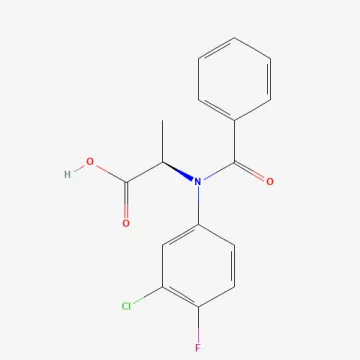
Flamprop-M-isopropyl
Description
Mode of action
Flamprop-M-isopropyl belongs to the aryloxyphenoxypropionate chemical class and acts as a selective systemic post-emergence herbicide.
The substance is primarily absorbed by the leaves of weeds and is rapidly translocated through the phloem to the meristematic tissues and growing points.
The primary mode of action is the inhibition of the enzyme acetyl-CoA carboxylase, which is vital for fatty acid biosynthesis and cellular membrane formation.
As a result of metabolic disruption, the growth of susceptible weeds ceases within hours, with complete plant necrosis typically occurring over two to three weeks.
The chemical exhibits high selectivity, allowing the target cereal crops to metabolize the herbicide safely while susceptible weeds fail to neutralize the toxin.
What it targets
This herbicide is highly specialized for the control of wild oats (Avena spp.), which are significant competitive weeds in various small-grain cereal crops.
It provides excellent control of wild oats during the tillering stage, which is the most critical period for yield reduction due to competition for nutrients and water.
It is primarily used in wheat and barley fields, where Avena fatua infestation poses a severe threat to the production potential and grain quality.
Flamprop-M-isopropyl has little to no activity against broad-leaved weeds or other grass species, necessitating the use of supplementary herbicides if a complex weed population is present.
- Avena fatua (Wild oats)
- Avena sterilis (Sterile oats)
Rates and timing
Application timing is crucial: the most effective results are achieved when weeds are in the active growth phase, generally between the two-leaf stage and the beginning of stem elongation.
Spray volume and rates should be calculated based on local weed density and specific equipment settings to ensure uniform coverage of the target weed foliage.
Avoid applying the herbicide when the crop is under stress due to adverse environmental conditions such as extreme drought, heat, or cold stress.
Tank mixtures with other pesticides should only be conducted following established compatibility charts and manufacturer recommendations to prevent antagonism or phytotoxicity.
Ideal conditions for application include a temperature range of 10°C to 25°C and low wind speed to ensure effective uptake and minimize spray drift.
Restrictions
Flamprop-M-isopropyl is classified as a hazardous substance; therefore, operators must strictly adhere to personal protective equipment requirements during handling and application.
Precautions must be taken to prevent spray drift onto non-target areas, especially adjacent fields containing sensitive crops or grass species.
Storage must be restricted to authorized pesticide facilities, ensuring the product remains in its original, sealed containers to prevent accidental contamination.
Disposal of empty containers and leftover pesticide solutions must be performed according to local environmental regulations, preventing any discharge into water bodies.
To manage the risk of weed resistance, it is recommended to rotate this herbicide with other modes of action and maintain diverse crop rotation practices.
Status in the European Union
Not approved in the EU
- CAS number
- 90134-59-1
- Category (EU)
- HB - Herbicide
EU status is for reference only and does not replace national registration in your country.