
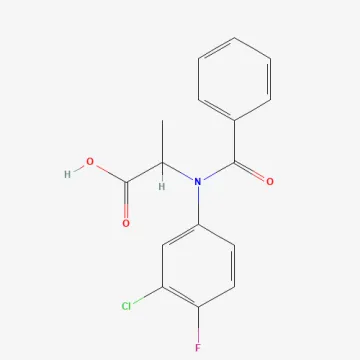
Flamprop
Description
Mode of action
Flamprop belongs to the aryloxyphenoxypropionate class of herbicides. These compounds act as systemic herbicides, primarily absorbed through the leaves of weeds and translocated through the plant's vascular system to active meristematic tissues.
The primary mechanism of action involves the inhibition of the acetyl-CoA carboxylase (ACCase) enzyme. By blocking this enzyme, the herbicide disrupts lipid biosynthesis, which is essential for cell membrane formation and overall plant growth.
These herbicides are known for their high selectivity, allowing farmers to control grassy weeds while maintaining the safety and yield potential of cereal crops like wheat and barley.
Symptoms of herbicide activity manifest gradually. Initially, plants show chlorosis in young leaves, followed by growth retardation, necrosis of the growing points, and eventual plant death.
In the soil, these compounds typically undergo microbial degradation. This characteristic reduces the risk of long-term soil accumulation and environmental impact when applied according to the labeled rates and guidelines.
What it targets
The primary target of the Flamprop group is the control of wild oats (Avena fatua) and other related grassy weeds that compete aggressively with cereal crops for water, nutrients, and sunlight.
These herbicides are highly effective at suppressing weeds during their active growth phase. By targeting specific physiological pathways in grasses, they provide a focused approach to field sanitation.
The efficacy against target weed populations depends on the timing of application. Managing weeds before they compete significantly with the crop ensures better nutrient uptake and final grain quality.
Integrated weed management programs often incorporate these herbicides to help prevent the development of resistant weed populations, especially when rotated with other modes of action.
By controlling competitive grassy weeds, the application of this group contributes to higher crop density and more uniform maturation of the grain at the end of the season.
Rates and timing
The timing of application is critical for maximum performance. Herbicide effectiveness is highest when target weeds are in the early tillering stage, before they begin rapid stem elongation.
Application rates are determined by the weed density and the development stage of the target population. Following the manufacturer’s technical data sheet is essential for achieving the desired control levels.
Proper spray coverage is vital. Using the correct water volume and nozzle configuration ensures that the herbicide reaches the target plant surfaces uniformly, which is crucial for uptake.
Environmental conditions during application, such as temperature and humidity, can influence systemic movement. Avoid spraying during high heat or drought stress, as this may limit the plant's metabolic activity and absorption.
It is recommended to check the chemical compatibility if mixing with other products. Poorly prepared tank mixes can reduce herbicide efficacy or cause damage to the cereal crop itself.
Restrictions
A primary limitation is the potential impact on aquatic ecosystems. Application must be strictly avoided near lakes, streams, and irrigation canals to prevent water contamination.
Strict safety protocols must be followed during handling and application. Personnel must use appropriate personal protective equipment (PPE) to prevent skin contact and inhalation.
Disposal of containers and rinse water must comply with local environmental regulations. Improper disposal can lead to soil degradation and long-term environmental hazards.
Storage areas must be well-ventilated, locked, and clearly marked, preventing access by unauthorized persons, children, and livestock, and kept away from food storage areas.
Farmers should observe the pre-harvest interval (PHI) carefully to ensure that no harmful chemical residues remain in the harvested grain, complying with international food safety standards.
Status in the European Union
Not approved in the EU
- CAS number
- 58667-63-3
- Category (EU)
- HB - Herbicide
EU status is for reference only and does not replace national registration in your country.