
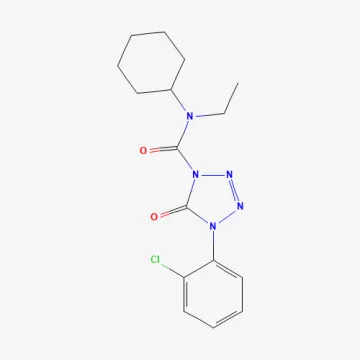
Fentrazamide
Description
Mode of action
Fentrazamide belongs to the acetanilide chemical class and is a highly effective selective herbicide. This compound inhibits cell division processes in weeds by blocking the synthesis of very long-chain fatty acids (VLCFA).
The mode of action is based on suppressing weed metabolism during the early stages of plant development. The substance is actively absorbed by seedlings and roots, leading to rapid growth cessation and the subsequent death of unwanted vegetation.
Due to its systemic effect, fentrazamide provides protection for crops against primary weeds that compete for moisture and nutrients during critical vegetation periods.
The preparation is characterized by selectivity towards specific agricultural crops, which allows for effective weeding without the risk of suppressing the main crop.
In the soil, the substance exhibits moderate persistence, providing prolonged action sufficient for suppressing multiple "waves" of weeds when applied correctly.
What it targets
The primary target application of fentrazamide is the control of a wide range of grass and certain broad-leaved weeds in rice fields.
The preparation is most effective against the following weed species:
- Echinochloa crus-galli (barnyard grass)
- Cyperus species
- Various aquatic weeds that clog rice paddies
Applying this preparation allows for a significant reduction in field weediness, which directly reflects on the productivity and quality of the rice harvest.
The herbicide demonstrates high activity even when weeds develop under flooded conditions, which is a critical factor for rice cultivation.
Rates and timing
Application rates of fentrazamide are determined based on the degree of field infestation, soil type, and the species composition of weeds present on the plot.
The preparation is primarily applied to the soil or water in rice paddies during the period before or immediately after weed germination, but before the crop emergence.
When used in tank mixtures, it is recommended to follow a strict sequence of component dissolution to ensure the stability of the working solution.
It is important to ensure uniform distribution of the preparation across the field surface, which is achieved by using properly maintained spraying equipment with calibrated pressure.
The number of treatments per season is strictly regulated and is usually limited to a single application to prevent the accumulation of residues in the grain.
Restrictions
Fentrazamide requires strict adherence to safety measures when handling concentrated formulations, including the use of personal protective equipment.
Drifting of the working solution onto neighboring sensitive agricultural crops must be prevented to avoid damage.
When working near water bodies, buffer zones must be maintained to prevent the active ingredient from entering open water sources and affecting aquatic life.
The product should be stored in a cool, dry, ventilated area, inaccessible to unauthorized persons, children, and animals.
After finishing operations, the sprayer must be thoroughly cleaned according to the regulations to avoid phytotoxicity during subsequent use of the equipment on other crops.
Status in the European Union
Not approved in the EU
- CAS number
- 158237-07-1
- Category (EU)
- HB - Herbicide
EU status is for reference only and does not replace national registration in your country.