
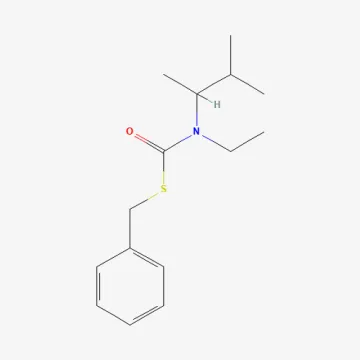
Esprocarb
Description
Mode of action
Esprocarb belongs to the thiocarbamate class of chemicals and acts as a systemic herbicide, primarily absorbed through the roots and emerging shoots of target weeds.
The mode of action involves the inhibition of lipid and protein biosynthesis in the meristematic tissues, which halts cell division and leads to the death of sensitive weeds.
This substance exhibits strong soil activity, which allows it to control weeds before they even reach the soil surface or during their very early germination stage.
Due to its systemic properties, the active ingredient is quickly translocated within the plant, ensuring a persistent barrier against early weed competition in the field.
Esprocarb is known for its high selectivity, making it a reliable tool for protecting crops while effectively suppressing competing grass species.
What it targets
Esprocarb is primarily used to control a broad spectrum of annual grass weeds that pose a significant threat during the early stages of crop development.
It is particularly effective against Echinochloa species (barnyard grass), which are notorious for outcompeting crops in various agricultural environments.
The herbicide also shows activity against certain sedge species, providing a comprehensive solution for fields suffering from mixed weed infestations.
By effectively removing weed competition early in the season, esprocarb application directly contributes to higher crop yields and better plant health.
Using this herbicide as part of an integrated weed management strategy helps reduce the pressure of hard-to-control weeds that might be resistant to other herbicide classes.
Rates and timing
Application rates for esprocarb must be carefully calculated based on soil texture, organic matter content, and the specific weed pressure present in the field.
It is typically applied in pre-emergence or very early post-emergence stages, specifically when weeds are at the "white spike" stage or have no more than two true leaves.
Proper coverage is essential for optimal efficacy, as the herbicide's activity is dependent on uniform distribution across the soil surface where weed seeds germinate.
Sufficient soil moisture is a critical factor, as it facilitates the activation of the active ingredient and its uptake by the roots of the target weeds.
When mixing with other agrochemicals, always conduct a compatibility test to prevent precipitation and ensure the mixture remains safe for the crops.
Restrictions
Application should be avoided during extreme temperature conditions, as high heat can lead to rapid degradation or loss of efficacy before the herbicide is fully activated.
Special care is required when applying to light or sandy soils, as there is a risk of the active ingredient leaching into lower soil layers if heavy rain occurs.
Operators must adhere to strict safety protocols, including the use of appropriate personal protective equipment, to prevent dermal and respiratory exposure during handling.
To maximize the longevity of the protective effect, it is often recommended to incorporate the product into the soil according to the manufacturer's specific guidelines.
Always store esprocarb in its original, sealed container in a secure, well-ventilated area, away from food, feed, and water sources to ensure safety.
Status in the European Union
Not approved in the EU
- CAS number
- 85785-20-2
- Category (EU)
- HB - Herbicide
EU status is for reference only and does not replace national registration in your country.