
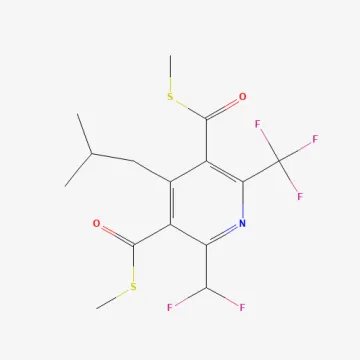
Dithiopyr
Description
Mode of action
Dithiopyr belongs to the pyridine chemical class and acts as a systemic herbicide with both pre-emergent and early post-emergent activity. The active substance blocks the process of cell division in the meristematic tissues of weeds.
The product inhibits the formation of microtubules, which is critical for normal mitosis. As a result, weed growth stops shortly after seed germination, making it a highly effective tool for controlling weed infestation at early stages.
Due to its ability to translocate within the plant, dithiopyr provides a reliable barrier in the soil layer. It maintains activity for an extended period, preventing the re-germination of weed seeds throughout the season.
The product is selective for most turfgrasses, which allows its use for protecting decorative sites. Its effect is most pronounced when weed seeds are in the germination phase.
The growth-inhibiting mechanism of dithiopyr is unique in that it affects the tubulin polymerization process. This distinguishes it from many other herbicides that work by inhibiting photosynthesis or amino acid synthesis.
What it targets
Dithiopyr is primarily used to control a wide spectrum of annual grassy weeds, including crabgrass species, annual bluegrass, barnyardgrass, and certain foxtail species.
In addition to grasses, the herbicide demonstrates high efficiency against a range of broadleaf weeds, such as common chickweed, common lambsquarters, and other typical weeds found in turf.
Its use is most justified on private properties, golf courses, and sports facilities where maintaining turf integrity without competition from weeds is essential.
The herbicide works effectively against seeds just beginning to germinate, suppressing their development before visible signs of damage appear on the soil surface.
An important advantage is the control of specific weed species that reproduce rapidly via seeds and are capable of displacing cultural plants during the first weeks of the growing season.
Rates and timing
Application rates for dithiopyr depend on soil type and weed composition, but on average they vary in the range of 0.3 to 0.8 kg of active substance per hectare.
For optimal effect, it is recommended to apply the product before weeds form their second pair of true leaves. Post-emergent action is limited to the early seedling stage.
It is important to distribute the product evenly over the soil surface, ensuring quality contact with the seed germination zone. Irrigation or rainfall after application promotes better penetration of the substance into the soil.
Application frequency is determined by climatic conditions and the rate of weed growth. Usually, one application in the spring is sufficient to protect the turf for the entire active growing season.
When used in mixtures with other pesticides, strict adherence to compatibility regulations is required to avoid reducing the biological activity of the product.
Restrictions
Dithiopyr is not recommended for use on newly seeded turf where the grass has not yet reached a sufficient degree of root system development. This may cause stunting of young cultural grass seedlings.
Avoid spray drift onto vegetable and flower crops, as it does not possess selectivity against most broadleaf decorative and agricultural plants.
Working with the herbicide requires standard individual protection measures, including gloves, respirators, and protective clothing to prevent contact with skin and mucous membranes.
Consider the soil type when planning applications, as the risk of leaching is slightly higher on light sandy soils compared to heavy loams.
After completing the work, the sprayer must be thoroughly cleaned to exclude any residual impact of the product on sensitive crops during subsequent spraying operations.
Status in the European Union
Not approved in the EU
- CAS number
- 97886-45-8
- Category (EU)
- HB - Herbicide
EU status is for reference only and does not replace national registration in your country.