
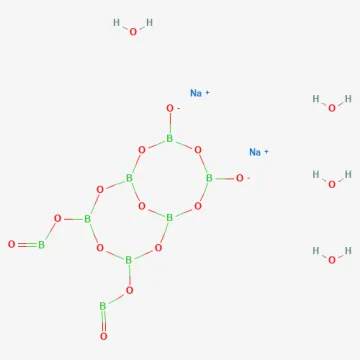
Disodium octaborate tetrahydrate
Description
Mode of action
Sodium octaborate tetrahydrate is a highly soluble boron compound used extensively in agriculture as a concentrated micronutrient source. It is known for its high boron content and excellent bioavailability, making it ideal for rapid correction of boron deficiency in various crops.
The mode of action against pathogens involves disrupting the metabolic pathways of fungi and bacteria. Boron compounds interfere with essential enzymatic activities and cell wall synthesis within the microorganism, ultimately inhibiting its growth and reproductive capabilities.
When used for insect control, the substance acts as a systemic insecticide that affects the digestive and nervous systems of the pests upon ingestion. It is particularly effective against wood-boring insects and certain household pests that threaten agricultural storage facilities.
In plant physiology, boron is essential for structural integrity, cell division, and the translocation of sugars. By applying this compound, growers can ensure healthy flower development and optimal fruit set, especially during periods of rapid vegetative growth.
The compound exhibits strong systemic properties, allowing it to move efficiently through the plant's vascular system. This ensures that the boron reaches the most active growing points, providing both immediate nutritional benefits and long-term protective effects.
What it targets
The primary use of this compound is to remediate boron deficiencies, which often manifest as stunted growth, death of terminal buds, and poor fruit quality. Crops such as oilseed rape, sugar beets, and fruit trees are highly dependent on adequate boron levels for yield stability.
It also serves as a potent fungicide, preventing and controlling various diseases such as powdery mildew and rot-causing fungi. This makes it a valuable tool for preserving the health of crops during both the growing season and the post-harvest period.
The substance is effective in managing populations of wood-destroying insects and ants, which can damage agricultural infrastructure. It acts by creating a treated environment that is toxic to these pests while remaining relatively stable over time.
- Correction of boron-related physiological disorders.
- Prevention and control of fungal pathogens in field crops.
- Protection of agricultural wooden structures from pests.
- Enhancement of pollen viability and fruit setting.
By preventing fungal colonization on fruit surfaces and storage tissues, sodium octaborate tetrahydrate significantly improves the shelf life of produce. It provides a protective layer that inhibits the penetration and spread of mycelium.
Rates and timing
Application rates must be carefully calculated to avoid boron toxicity, as the margin between sufficient nutrition and harmful levels is quite narrow. Typical foliar application rates range from 0.5 to 1.5 kilograms of the active substance per hectare.
The timing of application is crucial, with the most effective results obtained during the early blooming stages. Providing boron at this time is vital for ensuring high pollen viability and successful fertilization under variable weather conditions.
For wood protection, concentrated solutions are applied via spraying or injection methods to ensure deep penetration. The concentration used for these treatments is significantly higher than that used for plant foliar feeding.
The spray solution should be prepared by dissolving the powder in warm water, ensuring complete dispersion before use. Proper agitation is necessary to maintain a uniform concentration throughout the application process.
Re-application intervals should be at least two weeks to prevent the accumulation of excess boron in the soil profile. Periodic monitoring of plant symptoms or soil analysis is recommended before scheduling subsequent treatments.
Restrictions
Extreme caution is required when applying this product to sandy or low-organic-matter soils, where the risk of leaching and subsequent phytotoxicity is higher. Soil pH should also be considered, as boron availability decreases significantly in highly alkaline conditions.
Safety equipment, including gloves, goggles, and respiratory protection, is mandatory when handling the powder or concentrated solutions. Prolonged exposure to boron dust can cause irritation to the skin, eyes, and respiratory system.
Do not mix this compound with highly alkaline pesticides, as such combinations can lead to chemical precipitation and reduced efficacy. Always perform a small-scale compatibility test before mixing in a sprayer tank.
Storage should be in a cool, dry place within airtight containers to prevent moisture absorption and caking. The product is hygroscopic, and exposure to humidity will degrade its physical quality and ease of handling.
Avoid any runoff into water bodies or drainage systems, as boron can be harmful to aquatic life. Strict adherence to buffer zones is required to protect the surrounding environment during large-scale agricultural operations.
Status in the European Union
Not approved in the EU
- CAS number
- 12280-03-4
- Category (EU)
- HB - Herbicide
EU status is for reference only and does not replace national registration in your country.