
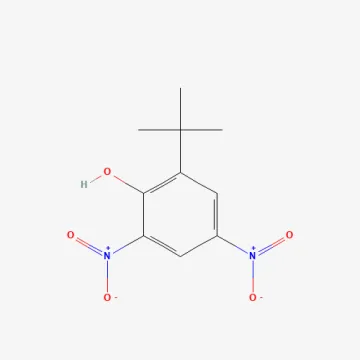
Dinoterb
Description
Mode of action
Dinoterb belongs to the dinitrophenol chemical class and functions as a contact-action herbicide. Its molecular structure allows it to effectively disrupt the process of oxidative phosphorylation in plant cells.
The mechanism of action of the substance involves uncoupling respiration and ATP synthesis. As a result of treatment, susceptible weeds lose the ability to produce the energy necessary to maintain vital functions, leading to rapid tissue death.
The substance shows high activity upon direct contact with vegetative parts of plants. It has virtually no systemic action, therefore requiring high-quality coverage of the leaf surface with the working solution.
In field conditions, dinoterb demonstrates a pronounced "burning" effect. Upon contact with weed leaves, the preparation causes tissue necrosis, which is visually noticeable just a few hours after application under sufficient sunlight.
The effectiveness of the preparation depends directly on the temperature regime. Rising air temperatures contribute to the intensification of metabolic processes in weeds, which accelerates the penetration and action of the active component.
What it targets
Dinoterb is intended for the control of a wide range of broad-leaved annual weeds. It effectively destroys both seedlings and developed plants in early stages of vegetation.
The preparation shows excellent results against such troublesome species as lambsquarters, various knotweed species, pigweed, and field mustard. It is indispensable in situations where quick field "cleaning" is needed before sowing or during critical crop growth periods.
The substance is often included in agricultural crop protection programs that possess natural resistance to dinitrophenols, or is used as a non-selective herbicide with proper dosage selection.
Using the preparation significantly reduces competitive stress from weeds on crops during their initial development period. This provides the crop with necessary access to moisture and mineral nutrients.
Although the action is limited to the contact type, dinoterb remains a reliable tool for destroying a secondary wave of weeds that germinate after primary soil tillage.
Rates and timing
Dinoterb application rates vary depending on the weed species composition and their growth stage. As a rule, treatment is carried out at the cotyledon to two-true-leaf stage for weeds to achieve maximum biological efficacy.
The working solution must ensure uniform wetting of the entire weed area. The recommended water consumption for ground spraying is 200–400 liters per hectare, which guarantees the necessary coverage.
Application timing is strictly limited by weather conditions. It is not recommended to spray during frost threats or immediately after rainfall, as this reduces phytotoxicity to weeds and may increase the risk of damage to the crop plant.
To prevent resistance formation in weed populations, it is recommended to alternate dinoterb use with herbicides of other chemical classes. This is critical for intensive crop rotation systems.
Control over dosage accuracy is mandatory. Exceeding set rates can lead to crop suppression, while underdosing leads to incomplete weed control and subsequent regrowth.
Restrictions
Dinoterb is a highly toxic compound, so strict adherence to safety regulations is required during use. Personal protective equipment for the skin, respiratory tract, and eyes is mandatory.
Strict ecological restrictions must be observed to avoid spray drift to neighboring fields or water bodies. The preparation poses a danger to fish and other aquatic organisms.
Crop rotation restrictions are usually absent, as the substance has moderate soil persistence and breaks down rapidly under the influence of microbiological factors and sunlight.
Storage of the preparation must be carried out in specialized warehouse facilities, excluding access by unauthorized persons and animals. Containers must be airtight and properly labeled.
Disposal of preparation residues and wash waters must be conducted in accordance with local pesticide management legislation. Discharging solutions into public sewage or open water bodies is strictly prohibited.
Status in the European Union
Not approved in the EU
- CAS number
- 1420-07-1
- Category (EU)
- HB - Herbicide
EU status is for reference only and does not replace national registration in your country.