
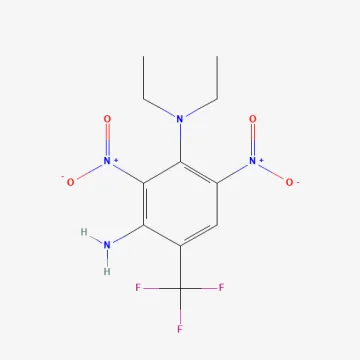
Dinitramine
Description
Mode of action
Dinitramine belongs to the dinitroaniline chemical class. It is a selective soil-applied herbicide that effectively inhibits the development of unwanted vegetation in agricultural crop fields.
Its mechanism of action is based on inhibiting cell division in the meristematic tissues of germinating weed seeds. The substance blocks the assembly of microtubules, making normal root and shoot growth impossible.
The product is absorbed by weed seedlings as they germinate through the treated soil layer. The herbicide is not systemic (does not translocate within the plant), making the creation of a reliable "herbicide barrier" critical.
Moisture in the soil after application is essential to activate the active ingredient. Under dry conditions, the herbicide's effectiveness can be significantly reduced, necessitating mandatory soil incorporation.
The duration of protective action ranges from 4 to 8 weeks depending on soil type, organic matter content, and weather conditions, ensuring control of early weed flushes.
What it targets
Dinitramine is primarily intended for the control of annual grass weeds and certain broadleaf weeds.
Sensitive species include troublesome weeds such as barnyard grass (Echinochloa crus-galli), various foxtail species, and some goosefoot species.
The product shows no activity against perennial weeds that develop from rhizomes or other underground vegetative organs, which limits its use in heavily infested fields.
The use of dinitramine is most justified in crops with long germination periods, where early control of competing flora is key to achieving high yields.
Efficacy against broadleaf weeds is considered moderate, so the product is often used in tank mixes or comprehensive crop protection programs.
Rates and timing
Application rates for dinitramine vary depending on the soil texture: minimal dosages are used on light soils, while maximum recommended rates are applied on heavy loams.
The product is applied directly to the soil before sowing the crop or immediately afterward, but strictly before the emergence of weed or crop seedlings.
Immediate mechanical incorporation to a depth of 3–5 cm is mandatory to prevent photodegradation of the active ingredient by sunlight.
Waiting periods before commencing field activities after dinitramine application must strictly comply with regional safety regulations and specific product labels.
When planning crop rotation, one should consider the herbicide's residual effect, although it is minimal for most crops when soil cultivation standards are followed.
Restrictions
Applying dinitramine to soils with very high organic matter content is strongly discouraged, as the organic matter actively binds the active ingredient, reducing its herbicidal activity.
Application on fields with a high risk of erosion should be avoided, as this can lead to undesirable herbicide redistribution within the soil profile.
When handling dinitramine, personal protective equipment (PPE) must be used to prevent contact with skin and mucous membranes.
Spray drift onto neighboring crops must be prevented, as the herbicide can cause phytotoxicity in sensitive plants.
Storage must be carried out in closed warehouse facilities while maintaining a temperature range that prevents freezing or overheating of the packaging.
Status in the European Union
Not approved in the EU
- CAS number
- 29091-05-2
- Category (EU)
- HB - Herbicide
EU status is for reference only and does not replace national registration in your country.