
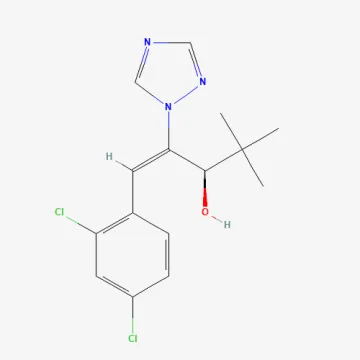
Description
Mode of action
Diniconazole-M belongs to the triazole chemical class and serves as a powerful systemic fungicide with significant protective, curative, and plant growth regulating properties.
The mechanism of action is based on the inhibition of ergosterol biosynthesis in pathogenic fungi cells, which leads to the disruption of their cell membrane integrity.
The substance rapidly penetrates plant tissues and begins to block fungal mycelium growth within the first few hours after contact with the pathogen.
In addition to its fungicidal effect, this active ingredient often exhibits plant growth retardant properties, slowing stem elongation and strengthening the root systems of young plants.
The active substance is characterized by high stability in soil, which provides long-lasting protection for seedlings against soil-borne and seed-borne infections.
What it targets
Diniconazole-M is effective in controlling a broad spectrum of diseases in cereals, vegetables, and fruit crops caused by fungi of the basidiomycetes and ascomycetes classes.
Primary targets for this preparation include smuts, various types of root rots, and powdery mildew.
The substance effectively suppresses leaf spot pathogens that develop during the early stages of crop vegetation.
It is widely used as a key component for treating seeds of wheat, barley, and other cereal crops.
- Smut infections (loose, covered smut)
- Root and crown rots
- Powdery mildew infections
Rates and timing
Application rates for Diniconazole-M are determined based on the crop type, target pathogen, and application method, such as foliar spray or seed treatment.
When used as a seed treatment, the dosage of the active ingredient is calculated based on the weight of the seeds, usually expressed in grams per ton.
Treatment timing occurs during the preparation phase for the sowing campaign, allowing seedlings to be protected during their most critical development stages.
For treating growing plants, application schedules are selected based on pest monitoring signals or applied preventively during high-risk infection periods.
Precise dosage must strictly adhere to the regulations stated on the specific product label to prevent potential phytotoxicity to the crop.
Restrictions
The use of Diniconazole-M requires adherence to standard safety measures, including the use of personal protective equipment for skin and respiratory tract.
It is strictly prohibited to allow chemical residues or wash water to enter water bodies, as the substance may be toxic to aquatic organisms.
Excessive application rates are not recommended to avoid unwanted growth stunting caused by the excessive retardant effect of the triazole compound.
Storage must be carried out in dry, cool warehouse conditions, protected from direct sunlight and kept away from unauthorized access.
Before starting application, ensure that spraying equipment is in proper working order to guarantee the uniform distribution of the fungicide across the target area.
Regulatory
Status in the European Union
Not approved in the EU
- CAS number
- 83657-18-5
- Category (EU)
- FU - Fungicide
EU legislation
EU status is for reference only and does not replace national registration in your country.
Content graph
Connections · Diniconazole-M
Most often together:
Marketplace