
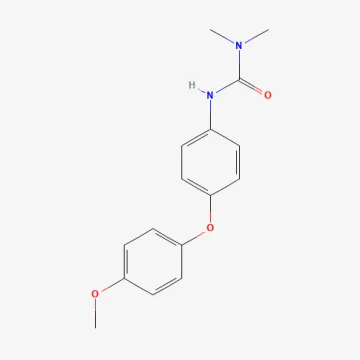
Difenoxuron
Description
Mode of action
Difenoxuron belongs to the chemical class of urea derivatives (phenylureas). It is a systemic active ingredient that is absorbed primarily through the root system of plants.
The mechanism of action involves the inhibition of photosynthesis. Specifically, it blocks the Hill reaction, disrupting electron transport in the light phase, which leads to plant starvation.
Upon absorption, the active substance moves through the xylem to the meristematic tissues, causing chlorosis and eventual necrosis of the weed.
The herbicide is characterized by high selectivity, allowing it to be used in fields of target crops without significant phytotoxic damage.
Residual soil activity provides a long-lasting barrier against secondary weed germination, depending on soil moisture and temperature conditions.
What it targets
Difenoxuron is used to control a broad spectrum of annual broadleaf and some grass weeds in industrial and agricultural crop plantings.
Key targets include common species such as Chenopodium album, Polygonum species, Stellaria media, and Capsella bursa-pastoris.
Optimal efficacy is achieved when weeds are at an early stage of growth, typically at the cotyledon or first true leaf stage.
The substance effectively suppresses weed populations in various crop systems, providing a reliable alternative for integrated weed management programs.
While effective, it is often recommended to rotate with other herbicide classes to maintain long-term management of potential resistant populations.
Rates and timing
Application rates are adjusted according to soil type and the degree of weed infestation. High humus content in soil generally requires higher doses.
Treatment should be timed to coincide with active weed growth, ensuring that adequate soil moisture is present for root uptake.
Late-season applications are generally less effective and are not recommended for maximizing the performance of the herbicide.
Environmental factors like extreme heat or cold should be avoided during application to ensure the plant metabolic processes allow for optimal uptake.
Adherence to recommended application intervals and pre-harvest safety periods is essential to meet food safety and regulatory standards.
Restrictions
Application near water bodies and wildlife areas is restricted to prevent ecological harm due to the chemical's persistent nature.
Measures must be taken to minimize spray drift, particularly when wind speeds exceed the threshold recommended for safe chemical application.
Operators must wear appropriate personal protective equipment, including respirators and chemically resistant gloves, to minimize exposure risk.
Equipment decontamination is mandatory after use to prevent contamination of other fields during subsequent spraying activities.
Store the chemical only in its original, sealed packaging in a well-ventilated, secure storage facility, away from food and animal feed.
Status in the European Union
Not approved in the EU
- CAS number
- 14214-32-5
- Category (EU)
- HB - Herbicide
EU status is for reference only and does not replace national registration in your country.