
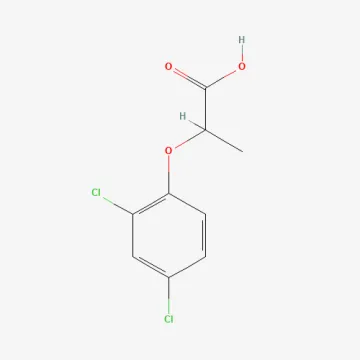
Dichlorprop
Description
Mode of action
Dichlorprop (2,4-DP) belongs to the chemical class of phenoxyacetic acid derivatives. Due to its physiological activity, it is classified as an auxin-type herbicide.
The mechanism of action is based on mimicking the natural plant growth hormone — indole-3-acetic acid. Upon entering the plant, the substance causes systemic metabolic disruption and uncontrolled cell division.
The active substance penetrates quickly through the leaf surface and translocates throughout the plant, including the root system. This leads to stem deformation, leaf curling, and subsequent weed death.
Dichlorprop-based products are often used in mixtures to broaden the spectrum of action. Synergy with other phenoxy acids allows for effective control of weeds resistant to other pesticide groups.
Dichlorprop-P (the optically active isomer) possesses higher biological efficacy, which allows for reduced active ingredient application rates while maintaining the same protective effect.
What it targets
The primary use of Dichlorprop is the control of broad-leaved (dicot) annual and some perennial weeds in cereal grain crops.
The substance is effective against such troublesome weeds as cleavers, field bindweed, sorrel, common chickweed, and black-bindweed.
Unlike many other hormonal herbicides, it shows high efficacy in controlling weeds at later development stages, which is crucial in cases of delayed application.
The product is actively used in intensive winter wheat, barley, and oat cultivation technologies to prevent yield losses due to weed competition.
- Cleavers (Galium aparine)
- Field bindweed (Convolvulus arvensis)
- Common chickweed (Stellaria media)
- Common lambsquarters
- Polygonum species
Rates and timing
Application timing for Dichlorprop is tied to the growth stages of the crops. The optimal period is considered to be from tillering to the beginning of the jointing stage in small grains.
Application rates vary depending on the specific product and weed sensitivity, typically ranging from 0.5 to 2.0 kg of active ingredient per hectare.
Temperature during application plays a key role: the best effect is achieved at average daily temperatures between +10°C and +25°C when plants are in active growth.
It is not recommended to spray during strong winds or when there is a risk of precipitation, as this reduces leaf adhesion and may cause spray drift to neighboring fields.
When using tank mixes, compatibility tests must be performed to prevent precipitation or a decrease in the efficacy of the active components.
Restrictions
A major limitation is the high sensitivity of broad-leaved crops (rapeseed, sunflowers, legumes, sugar beets) to Dichlorprop, even in microdoses.
Special attention should be paid to protecting neighboring fields from spray drift by using specialized nozzles and adhering to buffer zones.
Dichlorprop is characterized by a moderate soil degradation period, which usually does not hinder crop rotation, but caution is required when planning crops in the following season after high-rate applications.
Personal protective equipment for skin and respiratory protection is mandatory when handling the herbicide, as the substance is considered moderately toxic to humans.
Use near water bodies and fishing areas is strictly prohibited, as degradation products can be toxic to aquatic flora and fauna.
Status in the European Union
Not approved in the EU
- CAS number
- 120-36-5
- Category (EU)
- HB - Herbicide
EU status is for reference only and does not replace national registration in your country.