
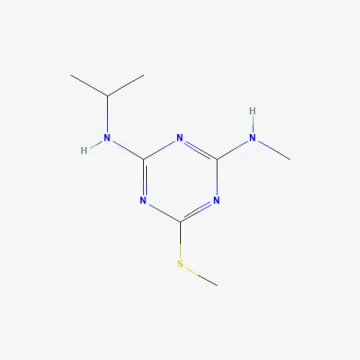
Desmetryn
Description
Mode of action
Desmetryn belongs to the chemical class of sym-triazines. It is a systemic herbicide primarily absorbed through the leaves and root system of weeds, then rapidly translocated via the xylem to the plant's growing points.
The primary mechanism of action involves the inhibition of photosynthesis. The substance blocks electron transport in photosystem II, leading to the disruption of energy metabolism within plant cells.
As a result of the cessation of photosynthesis, toxic metabolic products accumulate in the weeds, causing chlorosis, necrosis of tissues, and the eventual death of the plant.
The product exhibits selectivity because crop plants are capable of rapidly metabolizing desmetryn into non-toxic compounds, whereas weeds lack the ability for such detoxification.
The effectiveness of the product directly depends on temperature and soil moisture, as these factors determine the intensity of metabolic processes within the plants.
What it targets
Desmetryn is used to control a wide spectrum of annual broad-leaved and some grass weeds. It effectively targets species that are actively growing during early developmental stages.
Sensitive weed species include members of the Chenopodiaceae, Polygonaceae, and Brassicaceae families. The substance effectively suppresses species frequently found in vegetable crop fields.
The action of the herbicide is most pronounced when applied to young weeds at the cotyledon or early true-leaf stage. Overgrown weeds may exhibit resistance to the treatment.
Rates and timing
The application rates of desmetryn vary depending on the weed spectrum, the biological characteristics of the crop being grown, and soil type. Specific recommendations are provided in individual product regulations.
Optimal application timing coincides with the period of active weed growth. It is critical to perform spraying in calm weather to avoid drift of the working solution onto neighboring crops.
To achieve maximum biological efficacy, it is recommended to ensure uniform coverage of the weed leaf surface with the working solution.
Restrictions
Desmetryn is a moderately toxic compound to warm-blooded organisms; therefore, standard personal protective equipment (gloves, goggles, respirators, and workwear) must be used during handling.
Applications in close proximity to fisheries, water bodies, or drinking water sources are prohibited due to the risk of active ingredient migration.
Crop rotation must be respected after herbicide application, as residual amounts of triazines in the soil can affect the growth of sensitive subsequent crops in the rotation.
It is not recommended to mix the product with other crop protection agents without conducting a preliminary chemical compatibility test to avoid reduced efficacy or phytotoxicity.
The product must be stored in dry, specialized warehouse facilities away from children, pets, and food products.
Status in the European Union
Not approved in the EU
- CAS number
- 1014-69-3
- Category (EU)
- HB - Herbicide
EU status is for reference only and does not replace national registration in your country.