
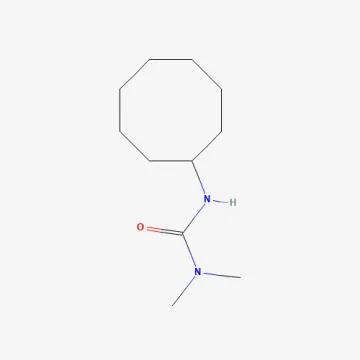
Cycluron
Description
Mode of action
Cycluron belongs to the chemical class of substituted urea derivatives. This systemic active ingredient is primarily absorbed by the root system of weeds from the soil solution.
The main mechanism of action is the inhibition of photosynthesis, specifically by blocking electron transport in the light reaction phase of photosystem II.
Disruption of cellular energy metabolism leads to growth cessation, leaf chlorosis, and the eventual death of the weed due to exhaustion of nutrients.
Products based on cycluron exhibit high selectivity, which allows for the effective protection of crops when application regulations are strictly followed.
The substance is characterized by relative persistence in the soil, providing a long-lasting protective barrier that prevents secondary weed emergence.
What it targets
This herbicide is used to control a broad spectrum of annual broadleaf and some grass weeds in various agricultural crops.
It is most effective against species such as Chenopodium album, Polygonum, Galeopsis, and Amaranthus, which frequently compete with crops for moisture and nutrients.
The cycluron group shows good results in suppressing young seedlings that have a developed root system in the upper soil layers.
In agronomic practice, this type of pesticide is often used in integrated protection systems to reduce field weediness during the early stages of vegetation.
The efficacy of the product against perennial weeds with deep root systems is significantly lower, necessitating combination with other control methods.
Rates and timing
Active ingredient application rates are determined by soil texture: heavier soils with higher organic matter content generally require higher dosage levels.
Application is typically performed before crop emergence to ensure maximum herbicide uptake by weeds during the early germination stages.
An important condition for high biological efficacy is the presence of soil moisture, as dissolution of the product is necessary for transport into the root zone.
Applying to dry soil reduces the herbicidal effect; therefore, the optimal timing is after moderate rainfall or when irrigation is provided.
Precise timing depends on the climatic zone and the biological characteristics of the specific crop, as detailed in the manufacturer's instructions.
Restrictions
A critical limitation is the adherence to crop rotation, as the residual effect of cycluron may negatively impact sensitive crops planted in subsequent years.
The use of the product on light, sandy soils with low organic content is prohibited due to the high risk of leaching the active ingredient into groundwater.
When working with urea derivatives, it is strictly necessary to use personal protective equipment to prevent contact with skin and mucous membranes.
Drift of the working solution onto neighboring fields with sensitive crops should be avoided by using high-quality spraying equipment.
It is important to store products in dry, cool conditions, avoiding direct sunlight to maintain the stability of the chemical formulation.
Status in the European Union
Not approved in the EU
- CAS number
- 2163-69-1
- Category (EU)
- HB - Herbicide
EU status is for reference only and does not replace national registration in your country.