
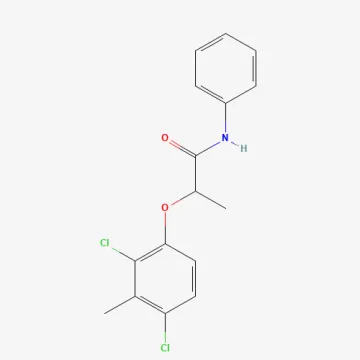
Clomeprop
Description
Mode of action
Clomeprop belongs to the phenoxypropionate chemical class. It is a systemic herbicide that acts selectively on plants, demonstrating high efficacy in specific agricultural conditions of rice cultivation.
The mechanism of action involves the inhibition of cell division processes in the meristematic tissues of susceptible weeds. Clomeprop blocks growth processes at early stages, leading to the cessation of development and the eventual death of unwanted vegetation.
The substance is absorbed by both weed seedlings and their root systems. Once inside the plant, it rapidly translocates through the vascular system, providing deep suppression of weed metabolism.
Due to its selectivity, the product is safe for rice crops when application regulations are followed, as the crop plant is capable of metabolizing the active component into non-toxic compounds.
Unlike many other herbicides, clomeprop shows high stability in flooded field conditions, maintaining activity even at high water levels, which is critical for protecting rice paddies.
What it targets
The primary purpose of clomeprop is to control a broad spectrum of weeds in rice crops, especially under flooded conditions.
The product effectively suppresses the development of many species of sedge weeds, which are serious competitors for rice in terms of nutrient intake and sunlight availability.
Furthermore, the agent shows activity against certain species of broad-leaved weeds, preventing their spread during the early phases of crop development.
The use of this herbicide allows for a reduction in field weed infestation, which significantly increases rice yield and simplifies the harvesting process.
A particular value of the substance lies in its ability to suppress weeds that are resistant to other herbicide groups, making it an indispensable element of anti-resistance programs.
Rates and timing
The application of clomeprop requires strict adherence to timing, which usually falls within the period from germination to the two-to-three leaf stage of the weeds.
Dosage rates are calculated based on the weed species composition and soil moisture conditions, typically applied in the form of granules or emulsifiable concentrates.
The efficacy of the product depends directly on the uniformity of distribution of the working solution or granules across the entire field area, which requires the use of specialized equipment.
It is recommended to carry out the treatment at stable air temperatures, as this promotes faster penetration of the active substance into weed tissues.
Following application, it is recommended to maintain a certain water level in the paddy for several days to ensure maximum herbicidal effect.
Restrictions
When working with clomeprop, it is necessary to use personal protective equipment for the skin, eyes, and respiratory organs, as the substance is toxic to humans if safety protocols are violated.
The discharge of water from rice paddies into open water bodies immediately after herbicide application is prohibited, as it may negatively affect aquatic ecosystems and fisheries.
The product should not be used on soils with very high permeability to prevent the migration of the active substance into deep horizons and the contamination of groundwater.
Storage of the product must be carried out in closed warehouse facilities, inaccessible to unauthorized persons, pets, and away from food products.
After the season ends, it is necessary to clean sprayers according to the manufacturer's instructions to avoid damage to sensitive crops during subsequent equipment use.
Status in the European Union
Not approved in the EU
- CAS number
- 84496-56-0
- Category (EU)
- HB - Herbicide
EU status is for reference only and does not replace national registration in your country.