Description
Mode of action
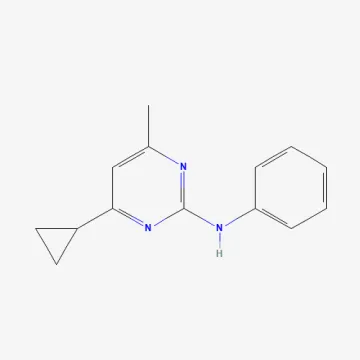
Cyprodinil belongs to the anilinopyrimidine chemical class and acts as a systemic fungicide with both preventative and curative properties against various fungal pathogens.
The primary mechanism of action involves the inhibition of methionine biosynthesis. By interrupting this essential amino acid production, the substance prevents the fungus from secreting enzymes necessary for host tissue invasion.
The compound exhibits excellent systemic activity, moving acropetally and translaminarly through plant tissues, which provides protection to both treated surfaces and new growth.
A significant advantage of cyprodinil is its efficacy at lower temperatures, making it an ideal choice for early-season disease management when other fungicides may be less active.
Due to its distinct mode of action, cyprodinil does not show cross-resistance with other fungicide classes, such as benzimidazoles or triazoles, serving as an effective tool in resistance management strategies.
What it targets
Cyprodinil is widely used to control a broad spectrum of pathogens that threaten pome fruits, stone fruits, grapes, and various vegetable crops.
It is particularly effective against scab (Venturia spp.), blossom blight, and grey mold, which are major economic threats to fruit production worldwide.
- Venturia inaequalis (apple scab)
- Monilia spp. (brown rot)
- Botrytis cinerea (grey mold)
- Alternaria spp. (early blight)
The fungicide is frequently deployed during the flowering stage and early fruit development to ensure the crop is protected during critical periods of susceptibility to fungal infections.
Besides immediate control, its use contributes to longer shelf life of harvested produce by suppressing late-stage storage rots caused by various pathogens.
Rates and timing
Application rates are determined by the crop type, disease pressure, and regional agricultural regulations, ensuring effective concentration for full coverage.
For fruit orchards, applications are typically scheduled during the early green tip phase and throughout the blossoming period to prevent primary infections.
To ensure long-term effectiveness, it is recommended to rotate cyprodinil with fungicides featuring different modes of action to prevent the development of resistant fungal strains.
The pre-harvest interval (PHI) varies by crop; it is essential to follow the specific label guidelines for each registered product to ensure compliance with safety standards.
Proper spray equipment calibration is vital to achieve uniform distribution across the foliage and fruit, maximizing the protective effect of the systemic compound.
Restrictions
Operators must wear appropriate personal protective equipment (PPE) during handling and application to prevent dermal contact and inhalation of the substance.
The substance is toxic to aquatic organisms. Applications should be managed to avoid spray drift into ponds, streams, or other water bodies near the treated area.
Storage should be in a cool, dry, well-ventilated location, ensuring the original container is tightly closed and inaccessible to children or unauthorized persons.
Tank mixing should always be preceded by a compatibility test to avoid chemical reactions, precipitation, or reduced effectiveness of the applied solution.
Disposal of unused product and empty containers must strictly follow local environmental regulations to minimize the ecological footprint in the agricultural ecosystem.
Regulatory
Status in the European Union
Approved in the EU
- CAS number
- 121552-61-2
- Approved from
- 01.05.2007
- Approval until
- 31.10.2026
- ADI
- 0.03 mg/kg bw/day
- ARfD
- Not appl.
- AOEL
- 0.03 mg/kg bw/day
Hazard classification (CLP)
Aquatic Acute 1 - H400Aquatic Chronic 1 - H410Skin Sens. 1 - H317
EU legislation
EU status is for reference only and does not replace national registration in your country.
Content graph
Connections · Cyprodinil
Most often together:
Marketplace
Products · 15