
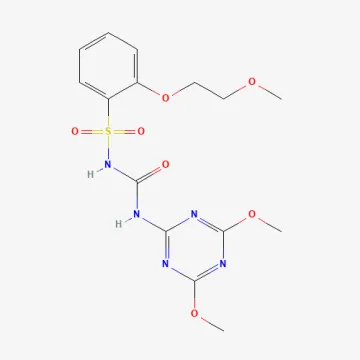
Cinosulfuron
Description
Mode of action
Cinosulfuron belongs to the sulfonylurea chemical class. It is a systemic herbicide that inhibits the acetolactate synthase (ALS) enzyme in target plants.
The active ingredient is rapidly absorbed by the leaves and roots of weeds, then translocated via the xylem and phloem to the meristematic tissues.
Blocking the synthesis of essential amino acids—valine, leucine, and isoleucine—leads to an immediate cessation of cell division and subsequent weed death.
Initial symptoms of the herbicide activity become visible after a few days, although complete weed mortality typically occurs within 2 to 3 weeks.
The product exhibits high selectivity, allowing it to be safely used on key crops without posing a risk of phytotoxicity to the main plant.
What it targets
The primary use of cinosulfuron is in rice cultivation, where it demonstrates high efficacy against a wide range of weed species.
The product successfully controls annual and perennial broadleaf weeds, as well as specific types of sedges and bulrushes common in wetlands.
The target list includes the most troublesome weeds that infest rice paddies, significantly simplifying maintenance and crop management.
Due to its specific activity, cinosulfuron is an essential tool in integrated weed management programs for difficult-to-control flora.
The effectiveness of the application depends directly on the accurate identification of the weed species present in the field before the herbicide is applied.
Rates and timing
Application rates vary depending on the growth stage of the crop, the intensity of weed infestation, and prevailing weather conditions during the growing season.
Generally, treatment is performed on actively growing weeds to ensure uniform coverage of the leaf surface with the working solution.
In rice paddies, it is crucial to maintain an optimal water level, as moisture facilitates better absorption and transport of the active ingredient.
Timing is linked to the phenological stages of the weeds: the highest susceptibility is observed at early development stages (up to 3–4 leaves).
It is vital to follow the protocol for preparing the spray solution to prevent a decrease in biological efficacy and the loss of active properties.
Restrictions
When using cinosulfuron, avoid drift of the product onto adjacent sensitive crops to prevent potential damage.
Application is not recommended during high winds or when there is a risk of precipitation, which may wash the active ingredient off the leaves before absorption.
Working with the pesticide requires strict adherence to personal protective measures: use of protective clothing, respirators, and gloves to guard skin and airways.
Crop rotation should be considered, as residual levels of sulfonylureas in the soil may impact sensitive follow-up crops.
Storage must take place in specialized dry facilities, kept out of reach of children, pets, and protected from direct sunlight.
Status in the European Union
Not approved in the EU
- CAS number
- 94593-91-6
- Category (EU)
- HB - Herbicide
EU status is for reference only and does not replace national registration in your country.