
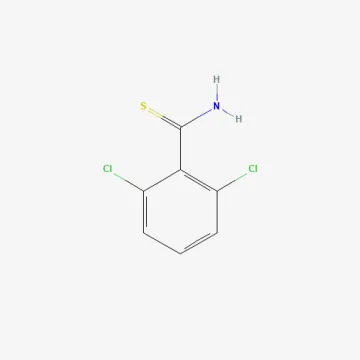
Chlorthiamid
Description
Mode of action
Chlorthiamid is a systemic herbicide belonging to the nitrile class, primarily used for its effective fumigant activity within the soil profile. It is known for its ability to target both the foliage and the root systems of various plant species.
The mechanism of action involves the inhibition of meristematic growth. Once in the soil, the compound is absorbed by the roots and translocated to the growing points, where it effectively shuts down cell division and nucleic acid synthesis.
As a soil-active herbicide, it creates a persistent zone of inhibition in the root zone. This is particularly effective because the chemical's metabolites remain active in the soil, preventing the regrowth of stubborn perennial weeds for extended periods.
The substance also exhibits a strong inhibitory effect on the respiratory processes of plants. By blocking essential metabolic pathways, it forces the plant into a state of rapid chlorosis and subsequent necrosis, starting from the roots upwards.
Due to its systemic nature, chlorthiamid is highly effective against plants with deep, complex underground structures. It ensures that the chemical reaches the perennating buds on rhizomes, which are typically shielded from standard contact-acting herbicides.
What it targets
Chlorthiamid is mainly utilized for the control of a wide range of broad-leaved weeds and specific grassy species. It is particularly valued for its efficacy against deep-rooted perennials that are difficult to manage with alternative chemical agents.
It is commonly deployed in non-crop areas, forest nurseries, and industrial sites to manage dense vegetative cover. It is also effective at controlling woody scrub and brush that may interfere with infrastructure or plantation establishment.
Target species often include troublesome weeds such as couch grass, thistles, bindweed, and various shrub species. Its ability to act as a soil sterilant at higher concentrations makes it useful for complete vegetation clearance.
By controlling weeds at the seedling stage, the product minimizes early-season competition. This is crucial in forestry and perennial crop establishment, where the presence of weeds can significantly retard the growth of young trees.
The product is also effective against various species of mugwort and other hardy weeds that possess the capacity for vegetative propagation from small root fragments, ensuring comprehensive control over the treated area.
Rates and timing
Application rates for chlorthiamid are highly dependent on the soil texture and organic matter content. Heavier soils typically require higher doses due to the adsorption of the active ingredient onto soil particles, which can reduce bioavailability.
Soil moisture is a critical factor for success. Proper moisture levels are necessary to trigger the fumigant activity of the compound. In dry conditions, the herbicide may remain dormant until sufficient rainfall or irrigation activates it.
The timing of application is usually scheduled for early spring or autumn. During these periods, plants are actively translocating nutrients to their roots, which facilitates the systemic uptake of the herbicide and ensures deep penetration.
Precise calibration of application equipment is essential to avoid overdosing. Excessive amounts can lead to long-term soil sterilization, rendering the land unsuitable for sensitive crops for multiple seasons following the treatment.
When applying the product to larger areas, uniform coverage is required. Patchy distribution can lead to incomplete control, allowing weeds to re-establish from unaffected patches in the treated soil layer.
Restrictions
Handling chlorthiamid requires strict adherence to safety protocols, including the use of appropriate personal protective equipment to prevent skin contact and inhalation of vapors, given its fumigant nature.
Application near sensitive areas or water bodies must be strictly managed with buffer zones. Runoff or drift into aquatic environments can have detrimental effects on non-target vegetation and aquatic ecosystems.
Due to its high persistence in certain soil types, rotational cropping intervals must be carefully observed. Farmers should verify the soil degradation rates before planting subsequent sensitive crops to avoid phytotoxicity.
It is strictly prohibited to apply the herbicide during high wind conditions to prevent off-target drift, which could damage neighboring crops, trees, or horticultural plants that are highly sensitive to this compound.
Storage must be maintained in dedicated, secure, and dry facilities. The chemical must be kept out of reach of unauthorized individuals and animals, ensuring that all containers are clearly labeled and securely sealed to prevent contamination.
Status in the European Union
Not approved in the EU
- CAS number
- 1918-13-4
- Category (EU)
- HB - Herbicide
EU status is for reference only and does not replace national registration in your country.