

RELDAN 22 EC
Доу АгроСайенсіс, Кінг’з-Лінн, Великобританія
Insecticides
0
0
·
77
1 offer
2.59 €per 1 l
Buy
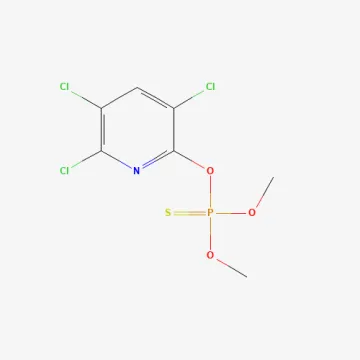
Chlorpyrifos-methyl belongs to the organophosphate class of chemicals. It serves as a potent broad-spectrum insecticide, providing contact, stomach, and fumigant activity against various pests.
The mode of action is based on the inhibition of the acetylcholinesterase enzyme in the nervous system of insects. This disruption leads to hyperstimulation of nerves, resulting in paralysis and subsequent death of the pest.
Due to its high vapor pressure, the substance effectively penetrates dense vegetation and confined storage spaces, making it a reliable solution for hard-to-reach insect populations.
It is well-regarded for its rapid knockdown effect, which allows for the immediate suppression of insect activity, protecting crops from damage during periods of high pest pressure.
While not a systemic insecticide in the classical sense, it possesses localized action and can be absorbed by the surface layers of plant tissues, providing a residual effect that contributes to effective pest control.
Chlorpyrifos-methyl is utilized across a diverse range of crops, including cereals, vegetables, and fruit trees, to manage economically significant pest populations.
It is specifically effective against chewing and sucking insects, including larvae and adults from the orders Coleoptera, Lepidoptera, and Hemiptera.
This substance is a vital tool for preventing crop destruction when pest populations reach economic thresholds, providing a swift recovery of the field environment.
Application rates for chlorpyrifos-methyl are tailored based on the crop type, pest intensity, and the environmental conditions at the time of application.
Standard field applications generally require water volumes that ensure thorough coverage, typically ranging from 200 to 400 liters per hectare depending on the equipment used.
Timing is critical: applications should be scheduled to coincide with the most vulnerable stages of the pest's lifecycle, such as the early larval stages or the peak of adult infestation.
For warehouse treatments, dosage is calculated based on the surface area or the volume of the facility to ensure the formation of a consistent barrier against infestation.
Farmers must strictly observe the pre-harvest interval (PHI) as specified in product labels to ensure that residues in harvested crops meet food safety standards.
Chlorpyrifos-methyl is highly toxic to bees and other pollinators; therefore, its application during the blooming period of crops is strictly prohibited.
Operators must adhere to local regulations regarding protective zones around apiaries and notify beekeepers in advance to minimize the risk to pollinator populations.
Handling this chemical requires robust personal protective equipment, including respirators, gloves, and protective clothing, to prevent respiratory or dermal exposure.
Environmental stewardship is mandatory; runoff into streams, ponds, or groundwater must be prevented to avoid the contamination of aquatic ecosystems and harm to fish.
To prevent the development of insect resistance, it is recommended to rotate chlorpyrifos-methyl with insecticides belonging to different chemical classes throughout the growing season.
Not approved in the EU
EU status is for reference only and does not replace national registration in your country.